
News
Working meetings, international cooperation, and participation in industry councils and scientific conferences.
Working meetings, international cooperation, and participation in industry councils and scientific conferences.
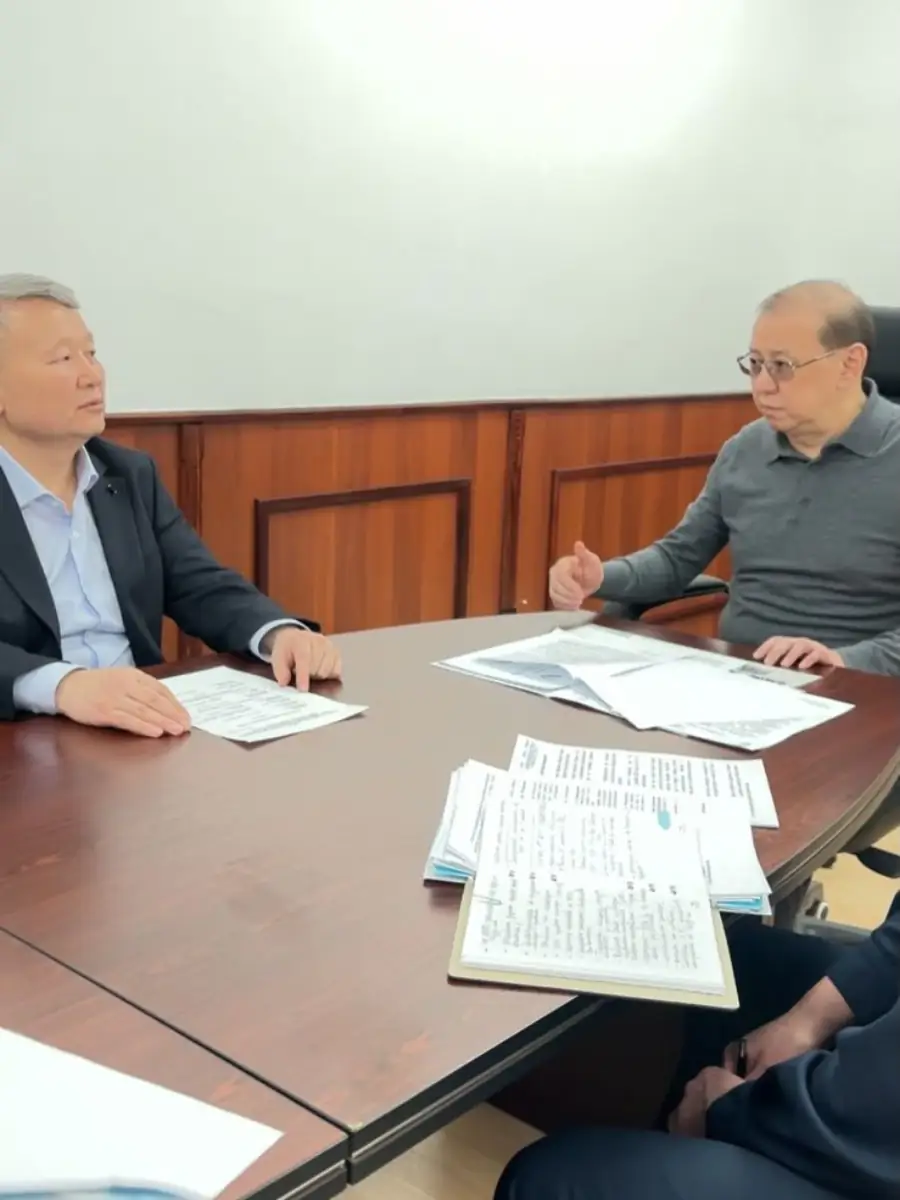 9 February 2026
At the initiative of the Administrative Police Committee of the Ministry of Internal Affairs, a working meeting was held with KazSRIRS specialists. The meeting discussed the structure and priority areas of road safety work. Particular emphasis was placed on science-based decision-making grounded in the analysis of risk factors, and on the use of modern management tools focused on prevention and the systematic reduction of the consequences of road crashes. Committee Chairman Murat Kabdenov noted the need to develop a National Road Safety Concept that takes account of Kazakhstan's specific conditions. This underlines that the agency is consistently moving towards a management model based on science and accurate data, which will ensure a sustained reduction in deaths and injuries on the country's roads.
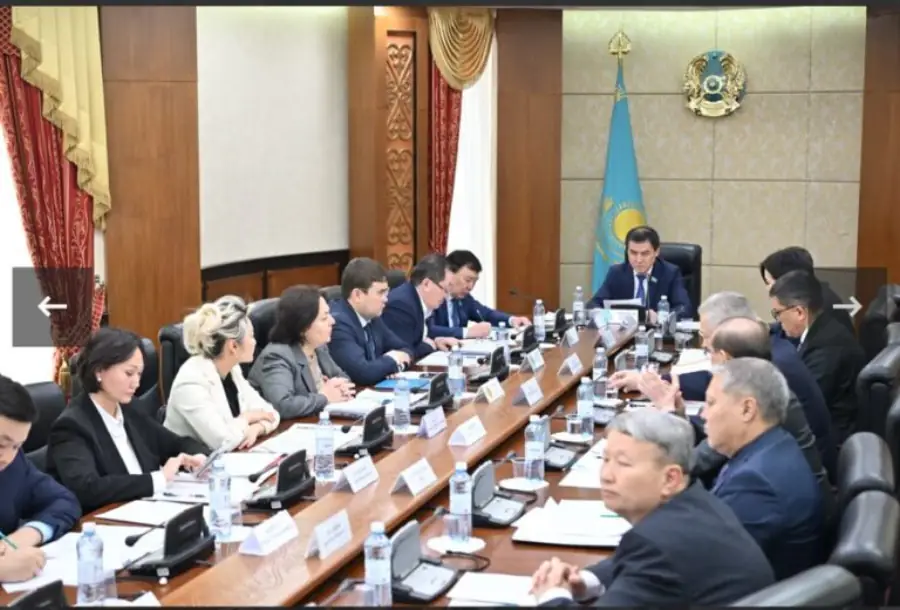 3 February 2026
At a meeting of the Committee on Constitutional Legislation, Judicial System and Law Enforcement Agencies, members discussed systemic road safety solutions: infrastructure development, driver training, prevention and inter-agency coordination.
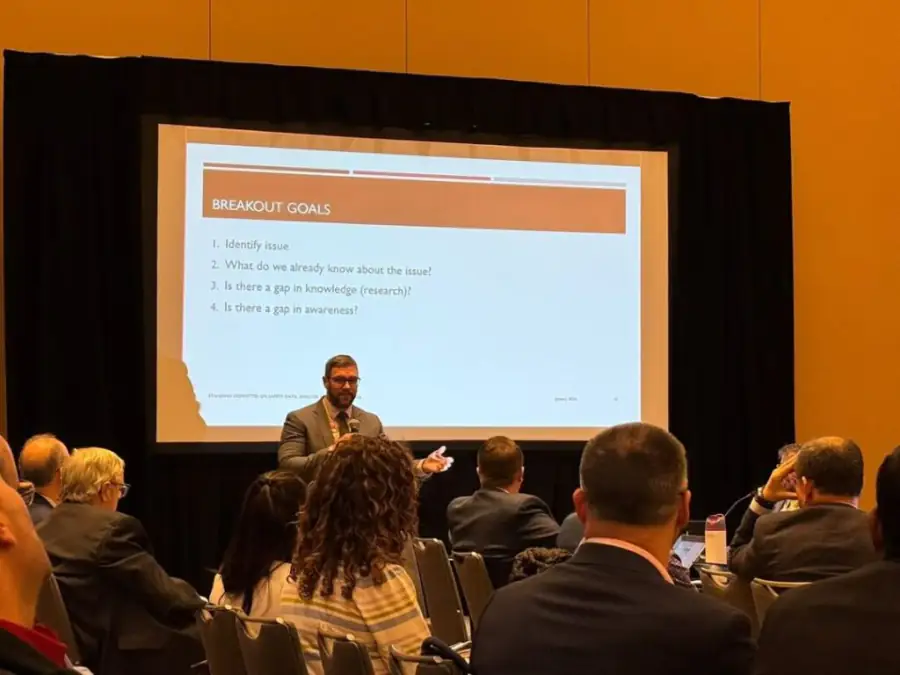 26 January 2026
He took part as an affiliate member of the Transportation Research Board (TRB), which operates under the US National Academies of Sciences, Engineering, and Medicine. This status entitles him to ongoing professional involvement in TRB activities, including the work of technical committees and expert groups.
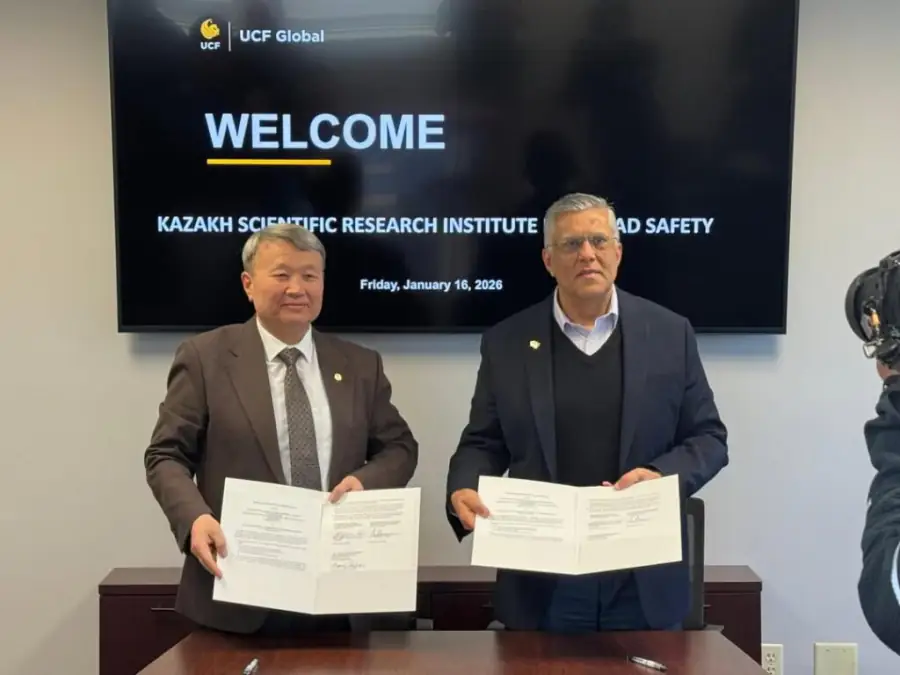 21 January 2026
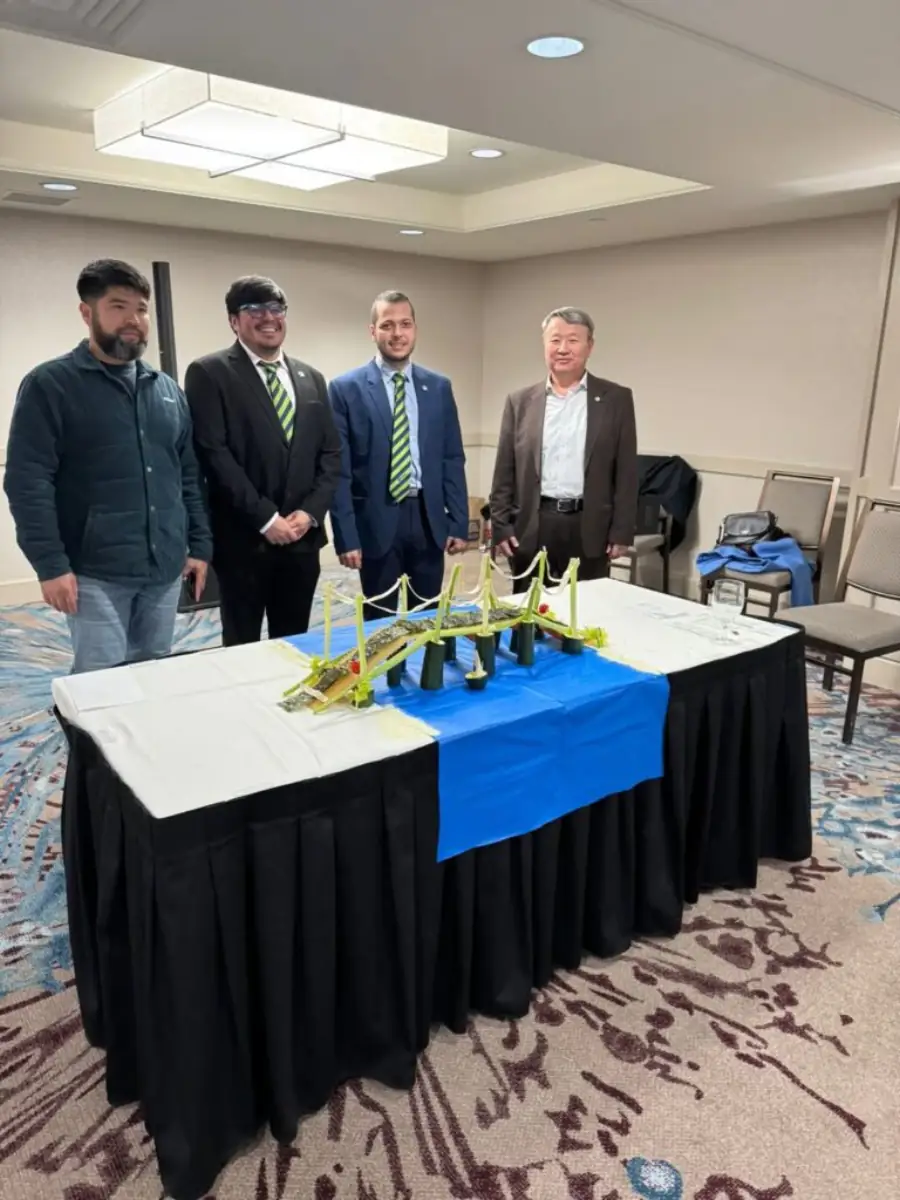
On 16 January 2026, a Memorandum of Understanding between the Kazakh Scientific Research Institute for Road Safety and the University of Central Florida was signed at the University of Central Florida (UCF, USA).
 20 January 2026
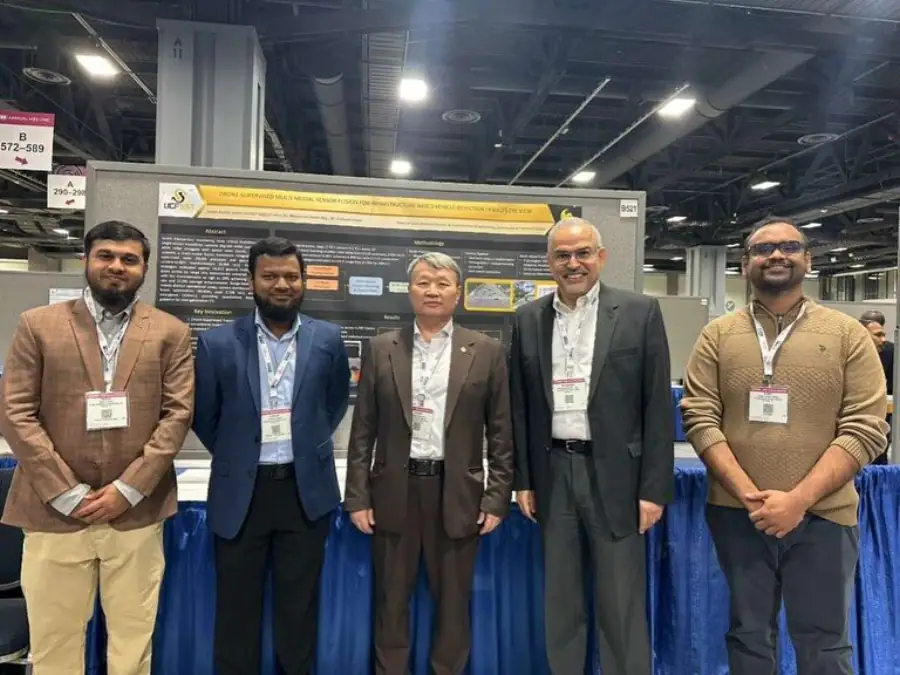
Arystan Massanov, Director of Kazakh Scientific Research Institute for Road Safety LLP (KazSRIRS) and a member of the International Road Federation (IRF) Road Safety Technical Committee, took part in the IRF Fellows Reunion Reception held on 13 January 2026 in Washington, D.C. (USA).
 19 January 2026
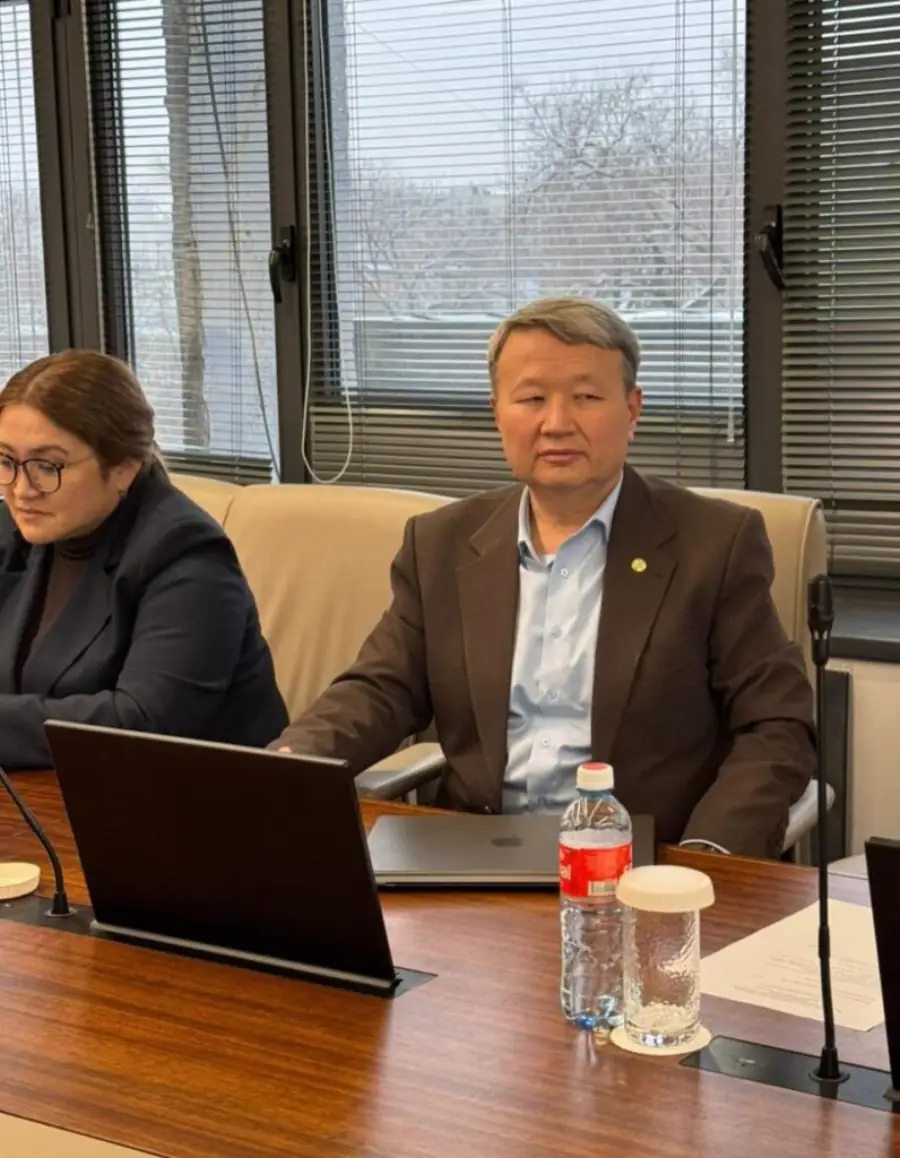
Road safety, road infrastructure and transport safety are today among the key priorities of transport policy and sustainable development worldwide. Effective solutions in this field are shaped by scientific research, data analysis and the international exchange of experience.
 24 December 2025
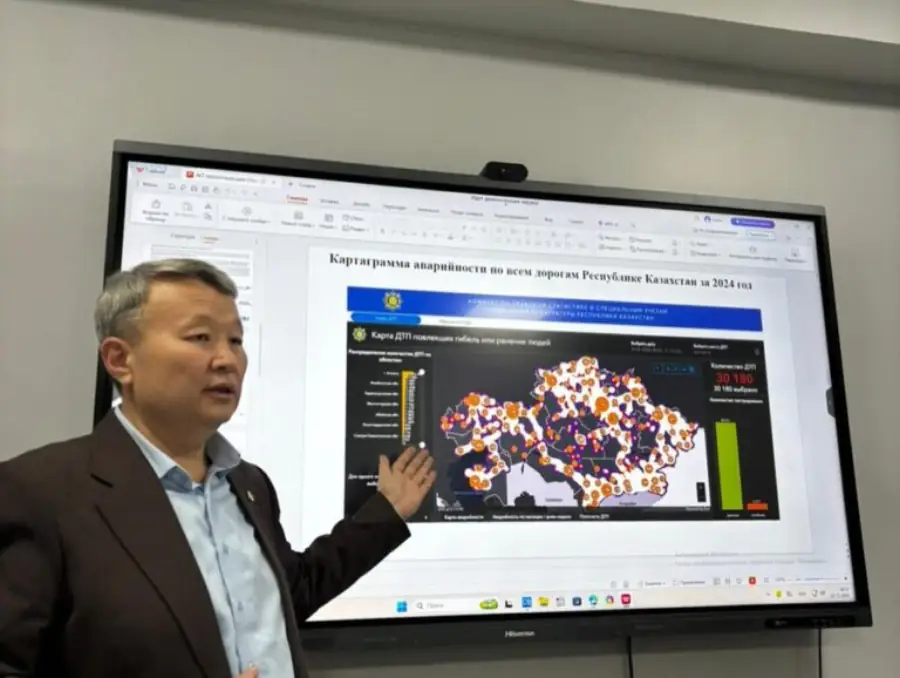
Arystan Massanov, Director of KazSRIRS LLP, took part in the meeting. The event reviewed the section's work in 2025 and discussed current issues in the development of the transport sector, including improving road safety, as well as promising areas of scientific and analytical work. In his speech, Arystan Massanov thanked the members of the working groups and the section's participants for their comprehensive support of road safety initiatives, their productive joint work and their contribution to preparing analytical materials and recommendations for the sector. He stressed the importance of combining scientific potential and practical experience to achieve sustainable road safety results. KazSRIRS LLP will continue its active work on providing scientific support for road safety, developing cooperation across the sector and introducing advanced international practices.
 24 December 2025
During the lecture, students specialising in the construction of roads and transport infrastructure were introduced to practical aspects of design and construction, modern approaches to road network development and key road safety issues. Particular attention was paid to: ▪️ the engineer's role in creating a safe road environment; ▪️ the importance of integrated infrastructure solutions; ▪️ the use of modern and sustainable technologies in road and transport construction; ▪️ the relationship between design decisions, road operation and crash rates; ▪️ the importance of introducing science-based and international practices in road safety.
 28 November 2025
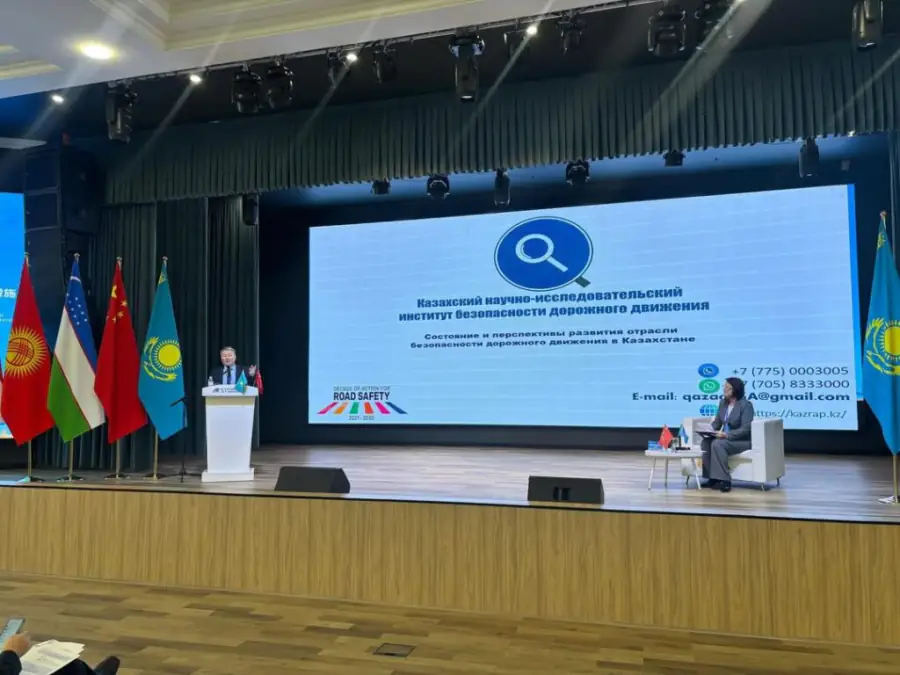
Today, Arystan Massanov, Director of Kazakh Scientific Research Institute for Road Safety LLP, presented a report at the Third Meeting of the Council of the China-Central Asia Alliance for Transport Personnel Training, hosted by Mukhamedzhan Tynyshpaev ALT University. The event brought together representatives of universities, government bodies and research institutes, as well as transport sector experts, from China and the five Central Asian countries. The main purpose of the meeting was to strengthen international cooperation, share experience and develop innovative approaches to training highly qualified transport professionals. In his speech, Arystan Massanov presented a report on the current state and development prospects of road safety in Kazakhstan, giving an analytical overview of the current situation, outlining key challenges and trends, and sharing the results of KazSRIRS research aimed at improving road safety and the sustainability of the transport system. KazSRIRS's participation in the Alliance Council meeting made a significant contribution to developing international dialogue and promoting scientific and technical cooperation among the countries of the region, especially on the sustainable and safe development of the transport sector.
15 November 2025Experts from KazSRIRS, KazADI, KazdorNII and the Almaty Academy of the Ministry of Internal Affairs, together with lecturers from Satbayev University and Eurasian Technological University (ETU), discussed key measures to reduce road crashes and Kazakhstan's forthcoming Road Safety Strategy to 2050. The meeting opened with a minute's silence in memory of those killed in road crashes. Participants spoke about the human factor, infrastructure, risk analysis and the need for inter-agency cooperation. The main conclusion: road safety is everyone's responsibility, and systemic measures by the state and the scientific community will help save thousands of lives.
14 November 2025The main aim of the event was to find ways to reduce road deaths and improve the safety of passenger transport. During the discussion, participants considered the human factor and the state of road infrastructure, as well as the role of ride-hailing platforms, including Yandex Taxi and inDriver, in fostering a culture of safe driving.
 12 November 2025
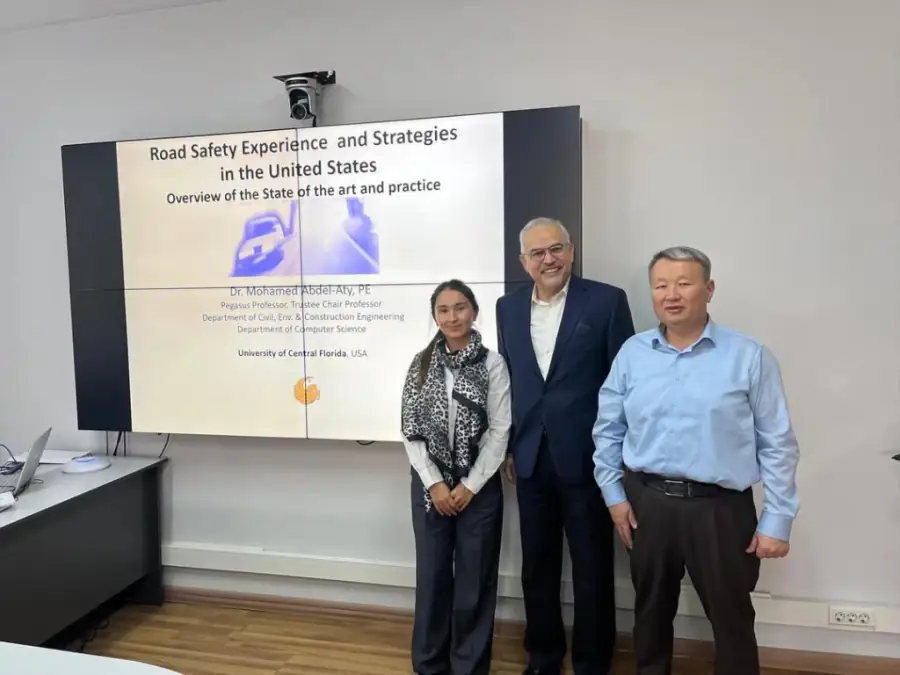
On 23 October 2025, Kazakh Road Research Institute JSC (KazdorNII) hosted a round table on improving road safety and developing the National Road Safety Strategy of the Republic of Kazakhstan. Participants included Mohamed Abdel-Aty, PhD, PE, F.ASCE, a professor at the University of Central Florida (USA) and one of the world's leading experts in transportation engineering and road safety, and Arystan Massanov, Director of Kazakh Scientific Research Institute for Road Safety LLP. During the meeting, Professor Abdel-Aty shared international experience in road crash analysis, the use of intelligent transport systems and the development of effective Vision Zero strategies. Particular attention was paid to adapting global best practice to Kazakhstan's conditions. The discussion covered prospects for scientific and expert cooperation in road safety, including the involvement of foreign specialists in developing and providing scientific support for Kazakhstan's National Road Safety Strategy. Events like this foster the exchange of best practice, the development of international cooperation and the strengthening of Kazakhstan's scientific capacity in transport safety.
 11 November 2025
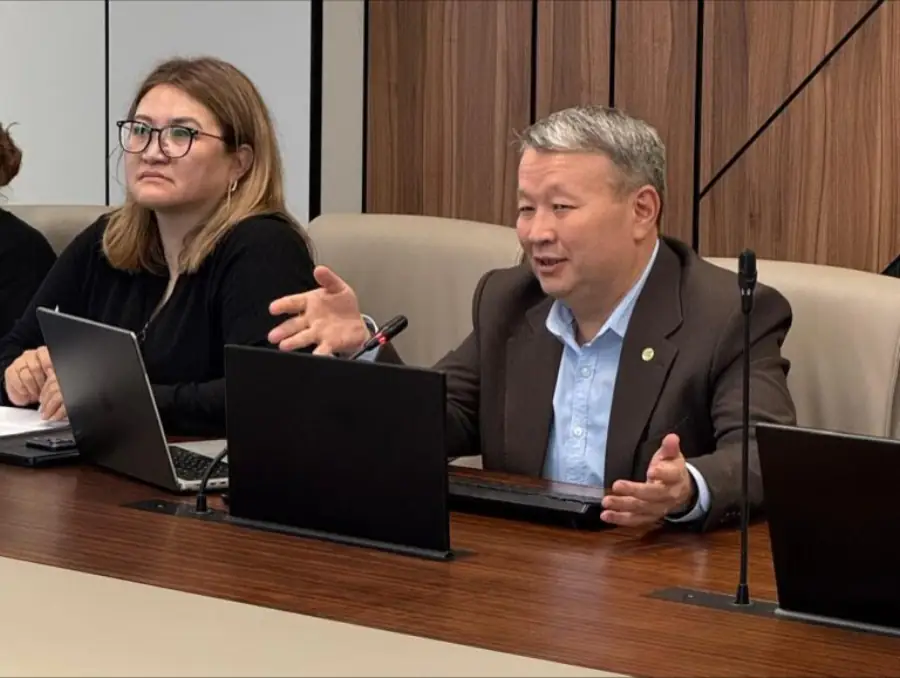
Chaired by Academician B. B. Teltayev, the meeting focused on current areas of development in the transport sector, including the draft National Road Safety Strategy of the Republic of Kazakhstan to 2050 and the Sectoral Programme for 2027-2030.
 21 July 2025
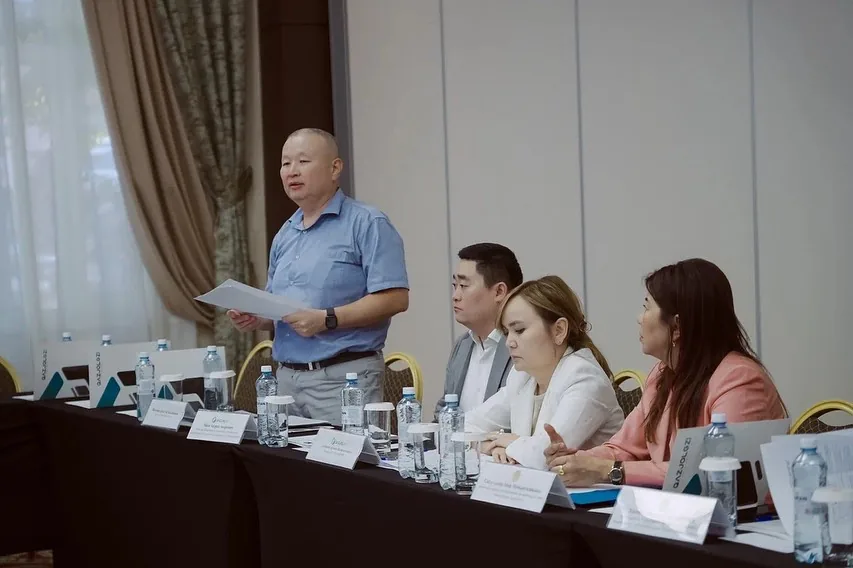
On July 16, 2025, a strategic session was held in Astana to discuss the draft Road Safety Strategy of the Republic of Kazakhstan, chaired by A. M. Gabdullina, Deputy Chairman of the Committee for Roads of the Ministry of Transport of the Republic of Kazakhstan.
 23 June 2025
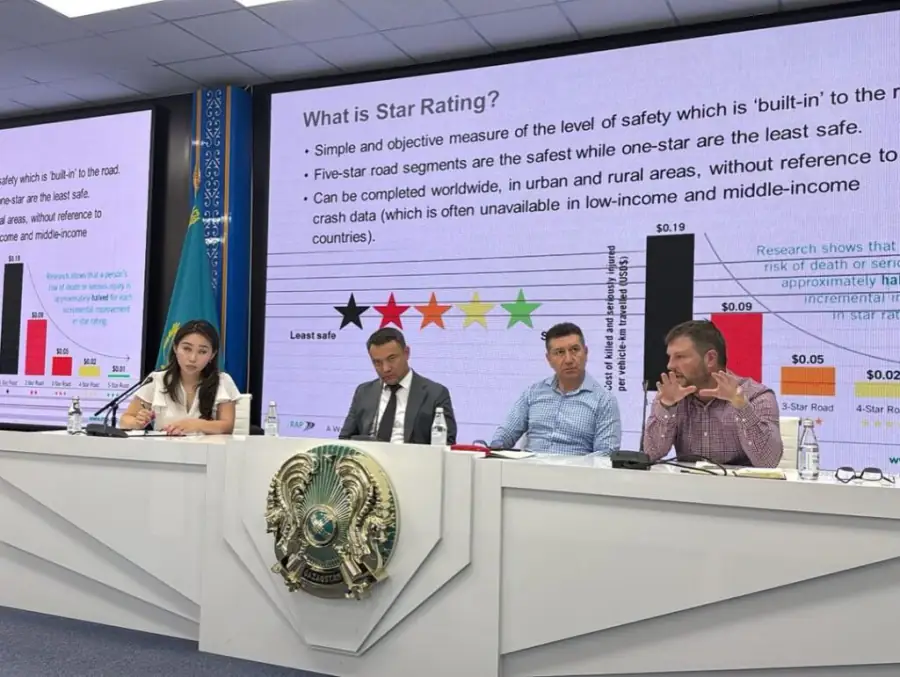
On 23 June 2025, a strategic meeting was held in Shymkent with iRAP international experts Luke Rogers and Julio Urzua, organised by the Shymkent City Department of Passenger Transport and Roads and Kazakh Scientific Research Institute for Road Safety LLP (KazSRIRS) as part of developing the Road Safety Strategy of the Republic of Kazakhstan. 📌 Key areas of cooperation discussed: ✅ Road assessment and rating using the iRAP methodology ✅ Safety inspection and audit of projects ✅ Risk mapping and analysis of crash clusters ✅ Development of an investment plan and effective countermeasures ✅ Introduction of a systemic approach and the Vision Zero concept ✅ Safety assessment of routes to school (SR4S) 🤝 The meeting included a round table with representatives of local authorities, the Administrative Police Directorate of the Shymkent City Department of Internal Affairs, local transport services and experts, which identified priority steps to reduce road crashes in the city. 🌍 We thank all participants and continue to move towards our main goal - zero deaths on the roads! 📨 For cooperation enquiries: qazaqrsa@gmail.com 🔗 More details: https://kazrap.kz
 16 June 2025
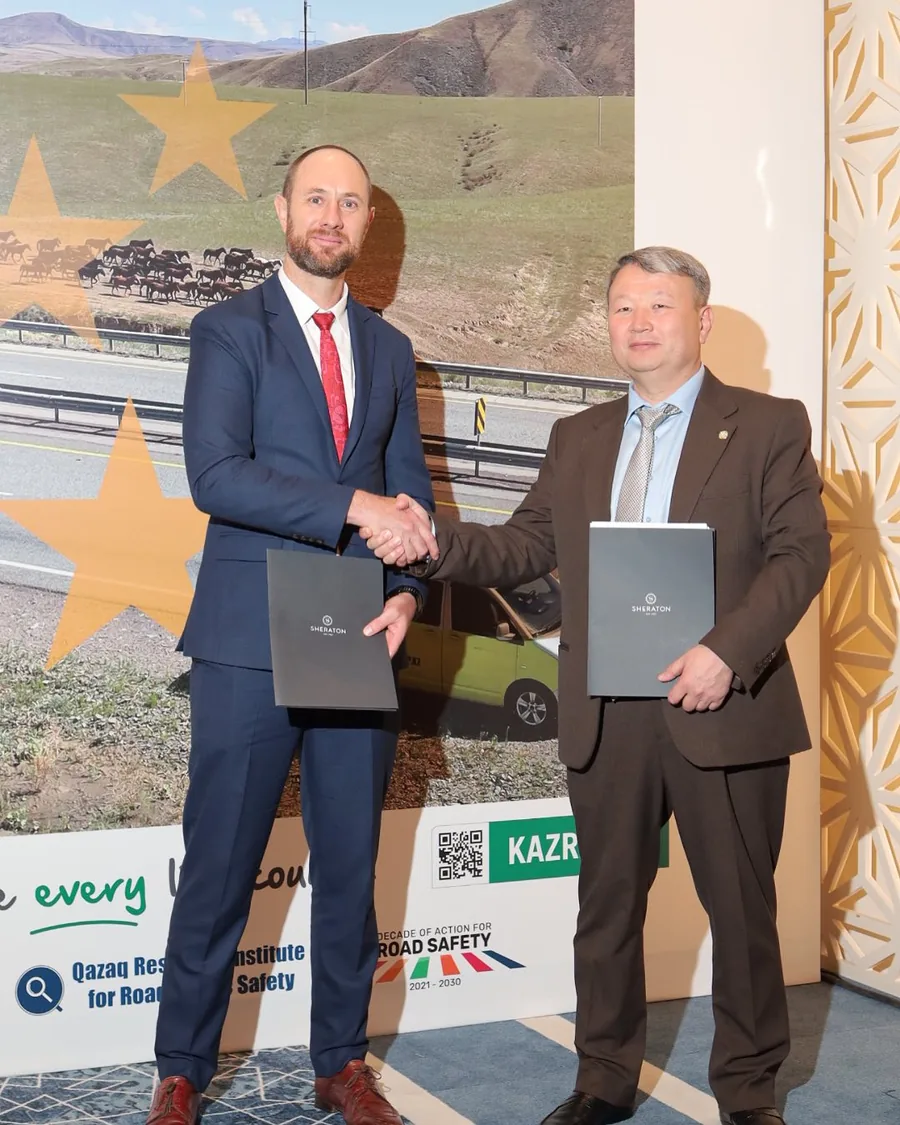
"The launch of the KazRAP road assessment programme is an important milestone in the development of the road safety system in Kazakhstan. Our partnership with iRAP and the introduction of advanced international standards give us a powerful tool for systematically analysing and improving the safety of our road infrastructure.
 5 May 2025
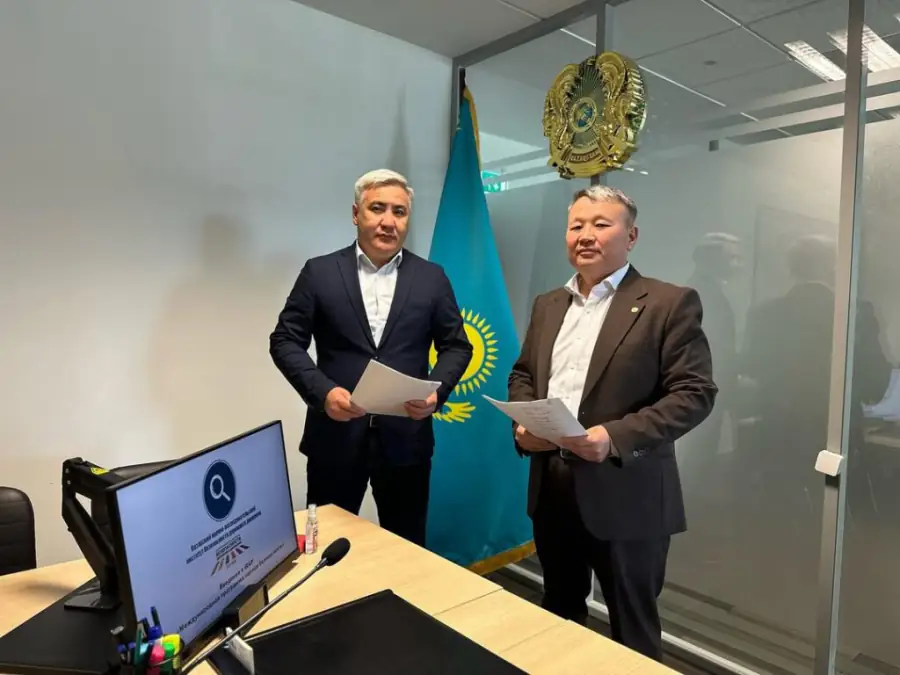
On 30 April 2025, KazAvtoZhol National Company Joint Stock Company and Kazakh Scientific Research Institute for Road Safety Limited Liability Partnership (KazSRIRS) signed an updated Memorandum of Understanding and Cooperation. The document is a logical continuation of earlier agreements and reflects both parties' commitment to deepening their partnership in improving safety on public roads in the Republic of Kazakhstan.
 13 November 2024
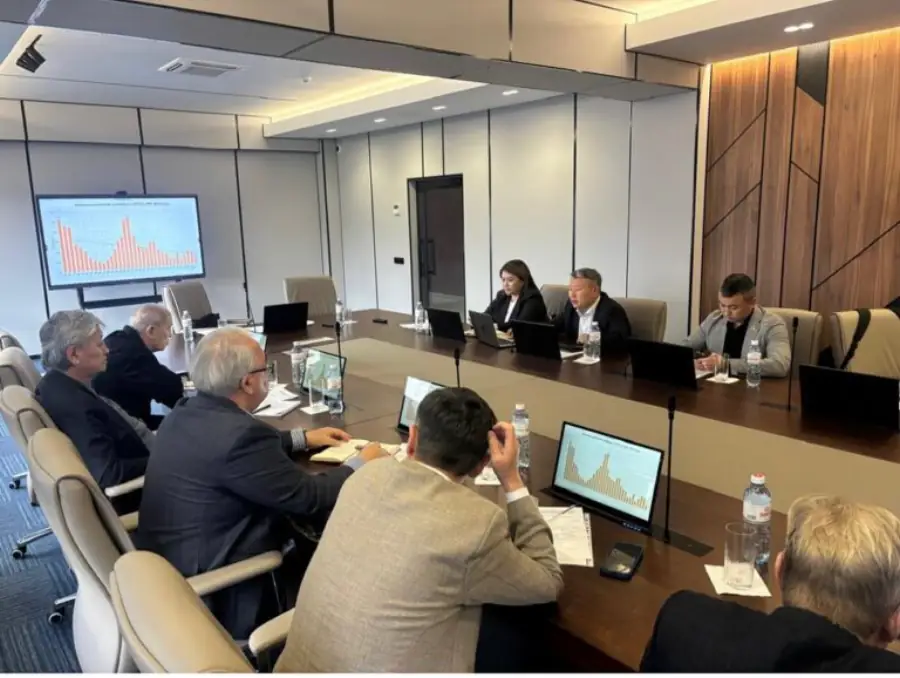
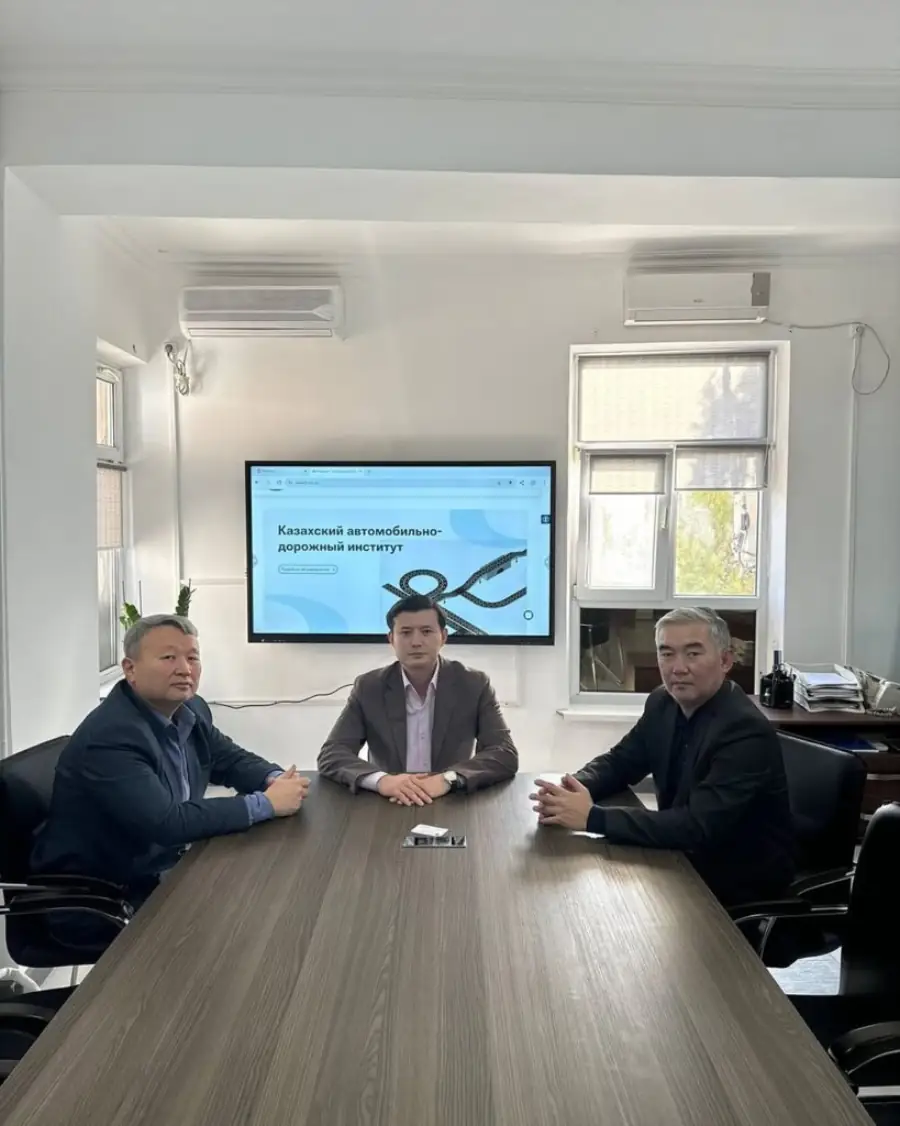
On 12 November this year, a meeting of the Transport Science working group of the National Academy of Sciences of Kazakhstan under the President of Kazakhstan was held, chaired by Doctor of Technical Sciences and Academician of the National Academy of Sciences of Kazakhstan Bagdat Teltayev. Arystan Massanov, Director of KazSRIRS LLP, presented a report on the problem of road safety. The main aspects of road safety in Kazakhstan were presented. According to the data presented, more than 512,000 road crashes were recorded in our country in 1991-2024, in which more than 95,000 people were killed and 622,000 injured. In 2024 alone, with the year not yet over, 2,053 people were killed and 29,916 injured in Kazakhstan, which is a terrible human tragedy. This has also caused colossal economic losses of 5.91 trillion tenge (in nominal GDP terms), equivalent to 4% of GDP. The report also outlined scientific areas in road safety that require solutions. The importance of institutionalising road safety management and creating a separate authorised body to coordinate all road safety activities was stressed. According to the participants, this will make it possible to address pressing issues more effectively and improve the overall situation on the country's roads. Key issues raised at the meeting included the high level of deaths and injuries on Kazakhstan's roads and the low level of awareness and responsibility among road users. The participants identified the main causes of road crashes, which underlines the need for a comprehensive approach to improving safety. The working group's scientists stressed that, in accordance with Article 3 of the Law of the Republic of Kazakhstan "On Road Traffic", the responsibility of government bodies involved in road safety takes priority over the responsibility of road users. The measures and initiatives discussed are intended to create safer conditions for all road users.
 11 November 2024
One of the main topics was the shortcomings in the training of specialists in this field. The participants noted that the existing system of training needs to be revised, as it directly affects the level of road safety.
8 October 2024On 8 October 2024, KazSRIRS Director Arystan Massanov spoke at the APRSO 2024 road safety conference in Tokyo. The theme of the conference was Safe and Sustainable Urban Transport. The conference was organised by the Asian Development Bank together with the Government of Japan and the Japan International Cooperation Agency (JICA). #JICA
 4 October 2024
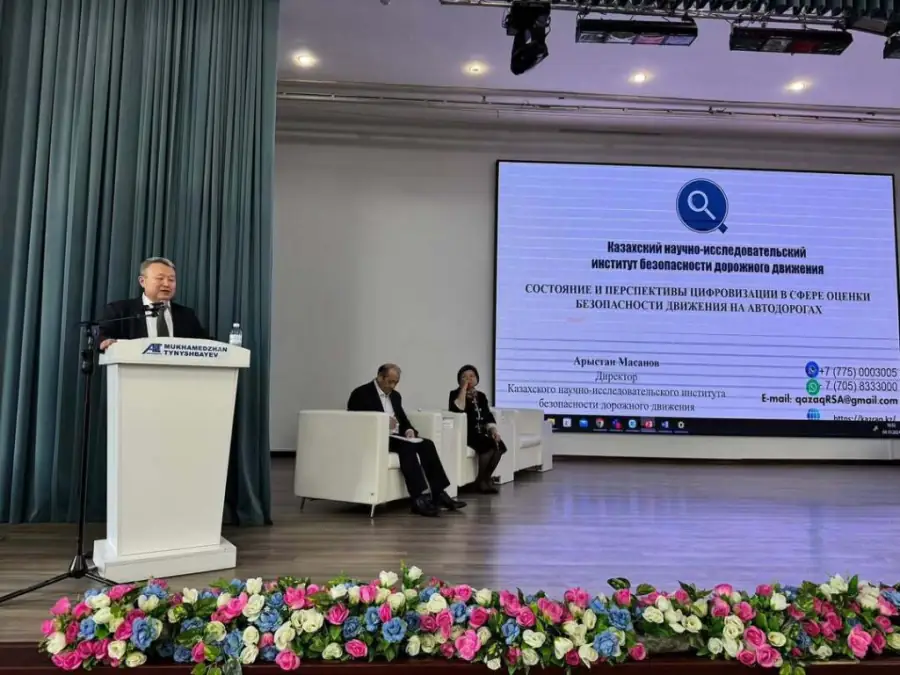
At the Eurasian Forum on Safety and Digitalisation in Transport, being held today, 4 October, at Mukhamedzhan Tynyshpaev ALT University, Arystan Massanov, Director of the Kazakh Scientific Research Institute for Road Safety, gave a presentation on "The state and prospects of digitalisation in road safety assessment".
 26 September 2024
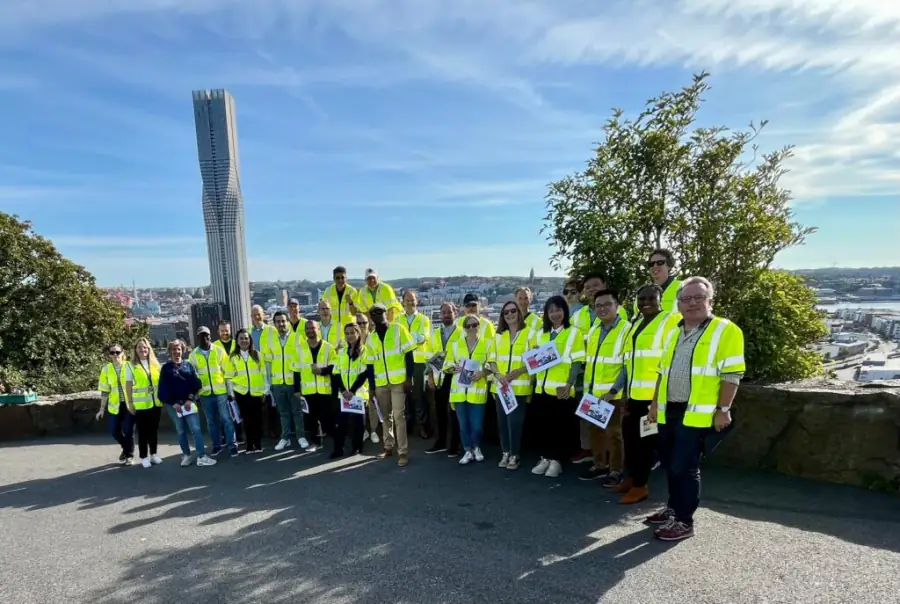
An employee of the Kazakh Scientific Research Institute for Road Safety completed the international course at the Vision Zero Academy in Gothenburg. The training, held since 2018, brings together a range of public and private organisations that share their knowledge and their contribution to making Vision Zero a reality. The course lecturers were mainly experts from the Swedish Transport Administration in their respective fields, along with guest lecturers from other authorities, municipalities, academia and industry. Study tours of rural and urban roads were organised.
 20 March 2024
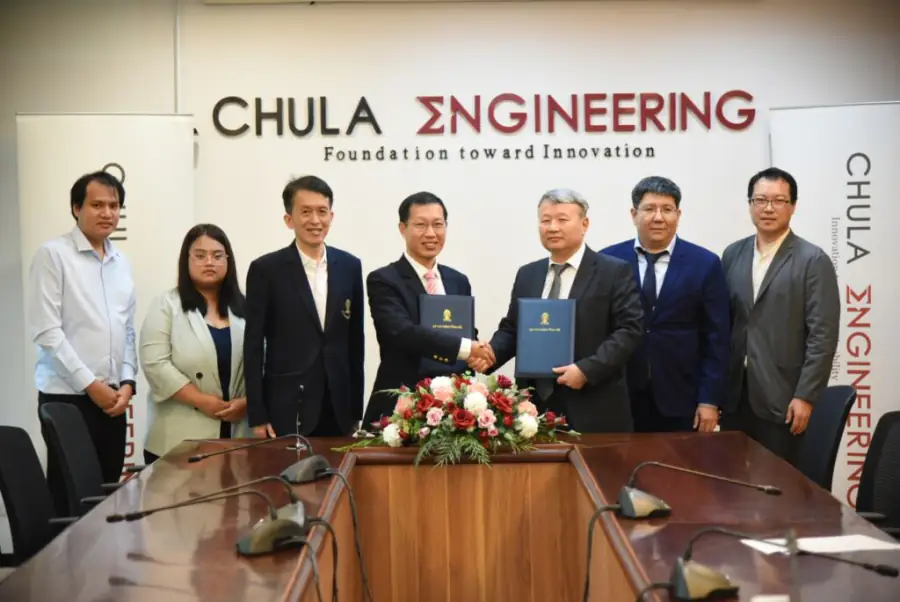
On 20 March 2024, the Kazakh Scientific Research Institute for Road Safety held a working meeting with the Faculty of Engineering, Chulalongkorn University. As part of its work to improve road safety in the Republic of Kazakhstan and to learn from international best practice, the Institute met the deputy deans and leading researchers of the Faculty to study Thailand's experience and build a strategic partnership with the Faculty of Engineering, Chulalongkorn University. A memorandum of understanding and cooperation was signed during the event. This step marks the beginning of a new stage of cooperation between two leading research organisations in the field of road safety.
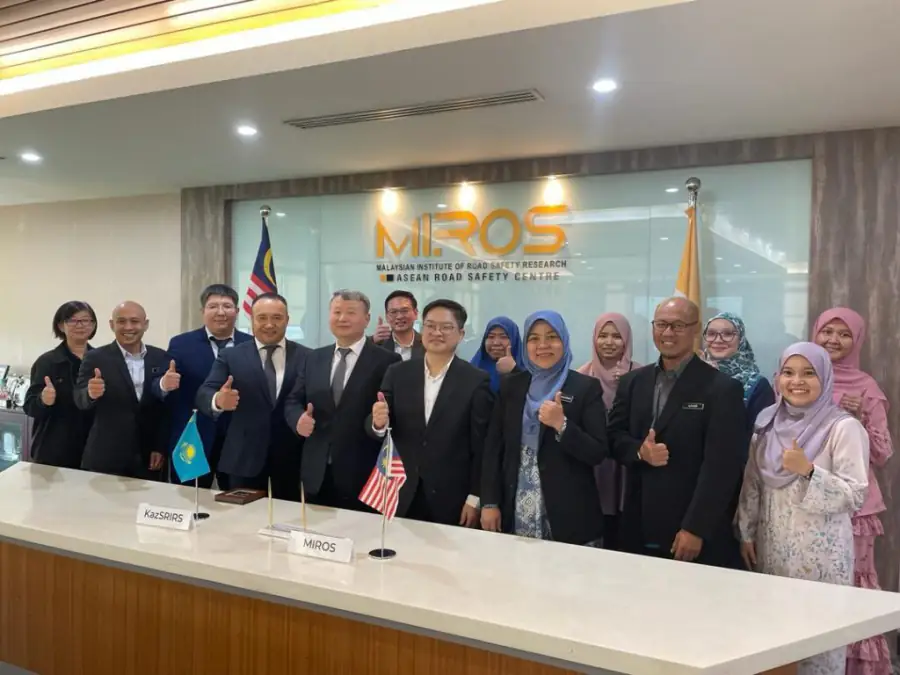 19 March 2024
With the support of the Embassy of the Republic of Kazakhstan in Malaysia, on 19 March 2024 the Kazakh Scientific Research Institute for Road Safety and the Malaysian Institute of Road Safety Research (MIROS) held a working meeting, at which a memorandum of understanding and cooperation was signed. This step marks the beginning of a new stage of cooperation between two leading research organisations in the field of road safety.
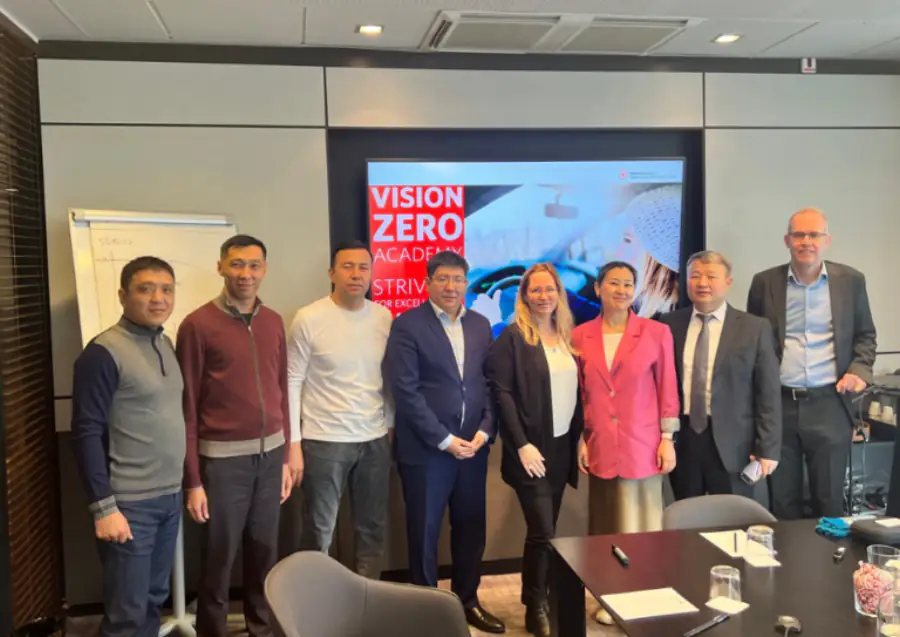 13 March 2024
Under an assignment from the Committee for Roads of the Ministry of Transport of the Republic of Kazakhstan, a draft departmental standard, "Road Safety Procedures", is being developed.
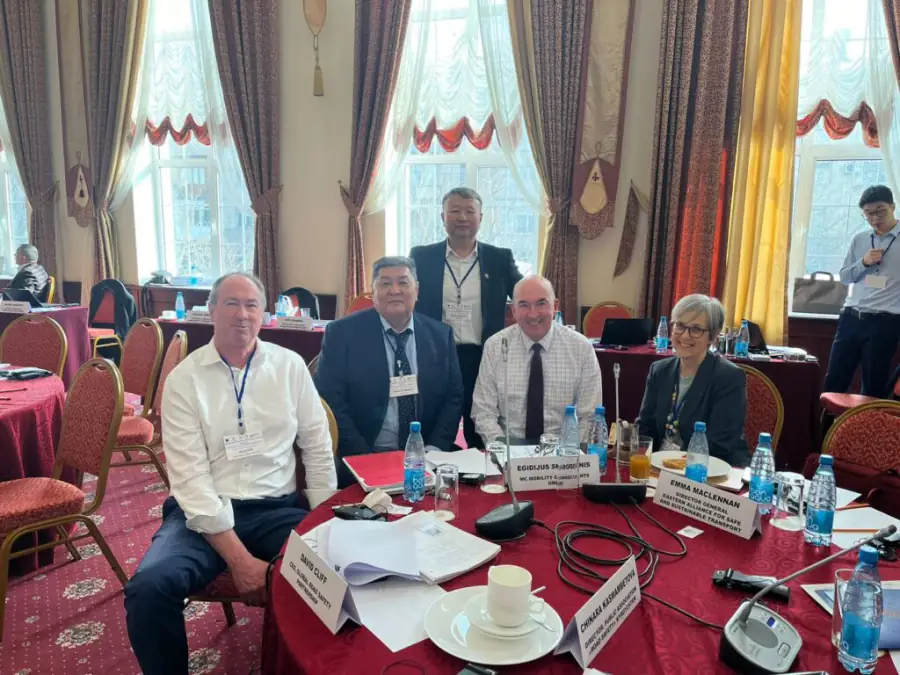 1 March 2024
From 26 February to 1 March 2024, a practical workshop was held in Bishkek, Kyrgyz Republic, under the Road Safety Capacity Building Programme: the CAREC Road Safety and Sustainable Mobility Course.
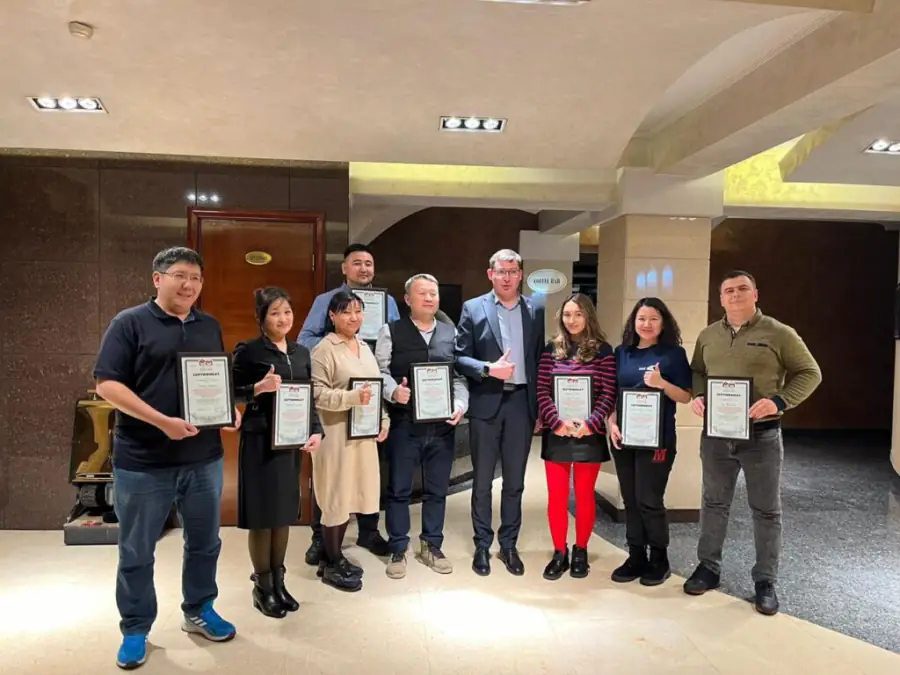 2 February 2024
The Kazakh Scientific Research Institute for Road Safety has always placed a strong emphasis on building the capacity of its team. We believe that in today's complex and rapidly changing world, keeping knowledge up to date is the top priority.
 21 December 2023
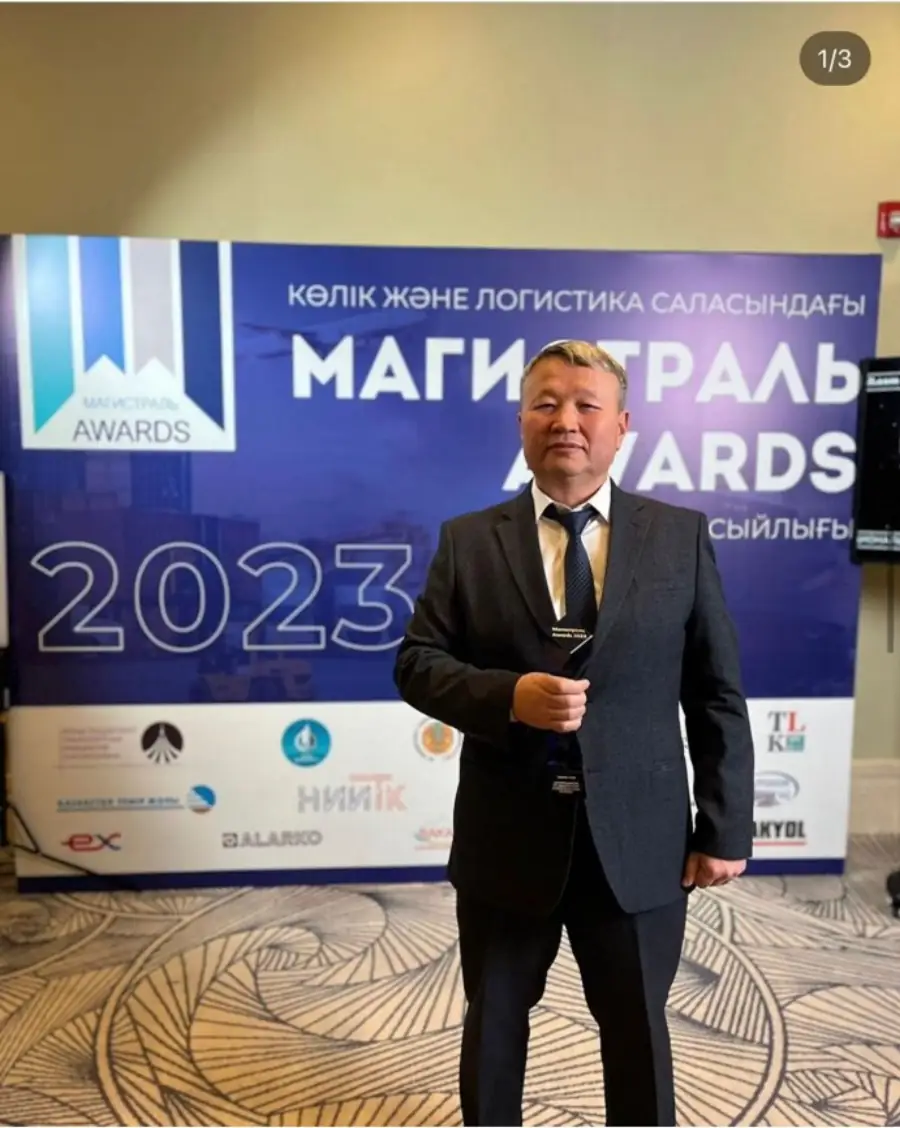
Arystan Massanov received a well-deserved award at the first national Magistral Awards ceremony, held on 20 December 2023. The award in the category "For the Development of Transport Science in Kazakhstan" reflects his significant contribution to road safety, his many years of experience in improving road safety and his proactive stance on the issue. Events such as the Magistral Awards, organised with the support of the Ministry of Transport of Kazakhstan and other major organisations, play a key role in highlighting the importance of research and innovation in the transport sector.
 24 November 2023
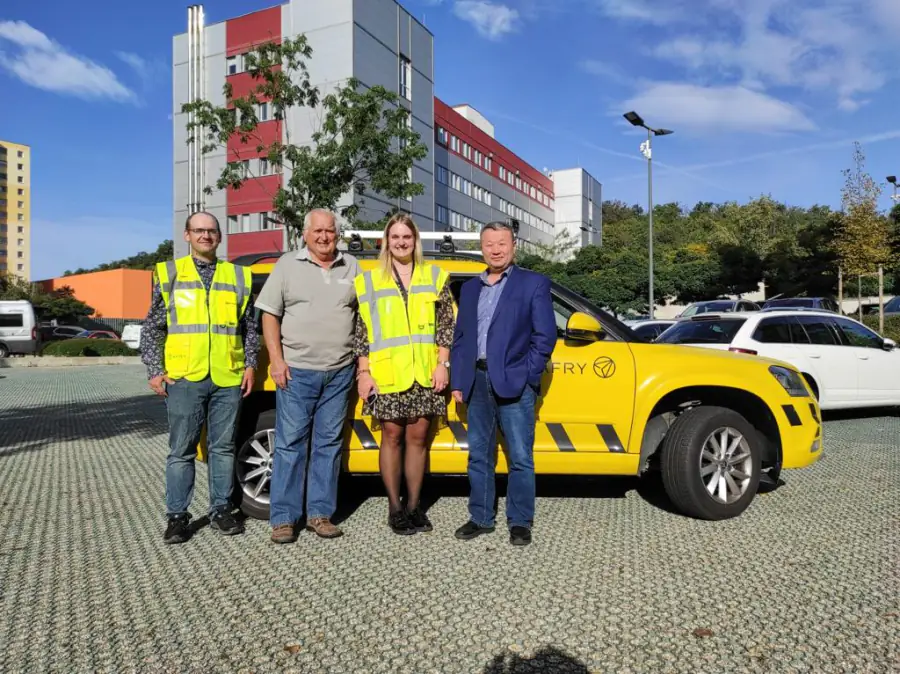
On 6 October 2023 in Prague, a memorandum of understanding was signed between AFRY CZ s.r.o., Czech Republic, represented by Executive Director Petr Košan, and the Kazakh Scientific Research Institute for Road Safety, Kazakhstan, represented by Director Arystan Massanov.
 24 November 2023
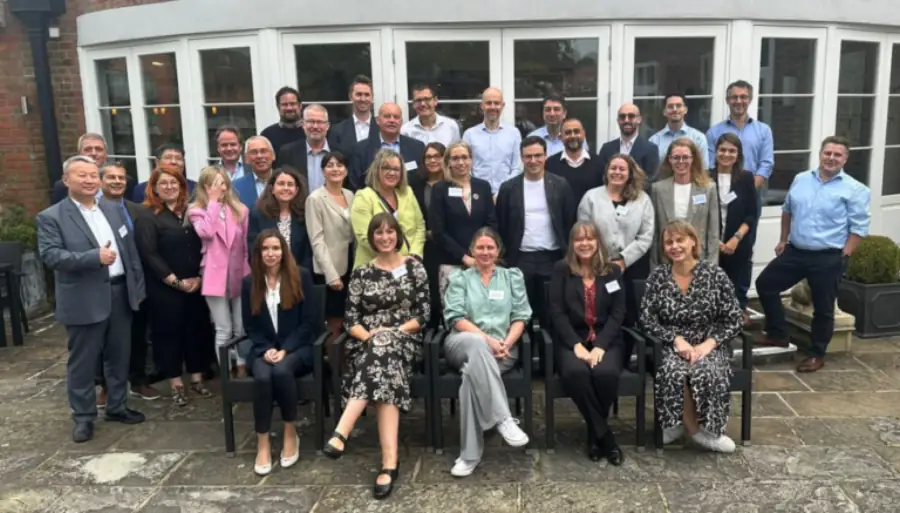
Arystan Massanov, Director of the Kazakh Scientific Research Institute for Road Safety LLP, and Deputy Director Zhandos Amanbayev took part in the meeting "International Road Assessment Programme in Europe: Advancing Road Infrastructure Safety towards 2030", held in London on 25-26 September 2023.
 7 November 2023
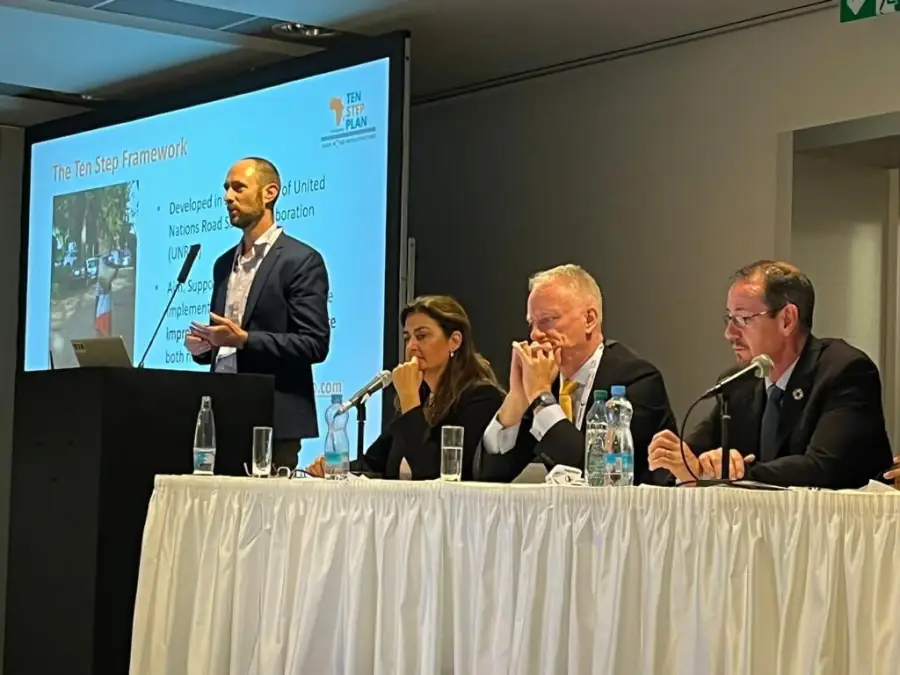
On 2-6 October 2023, Prague, Czech Republic, hosted the international PIARC conference, one of the world's leading road sector events, held once every four years.
 6 September 2023
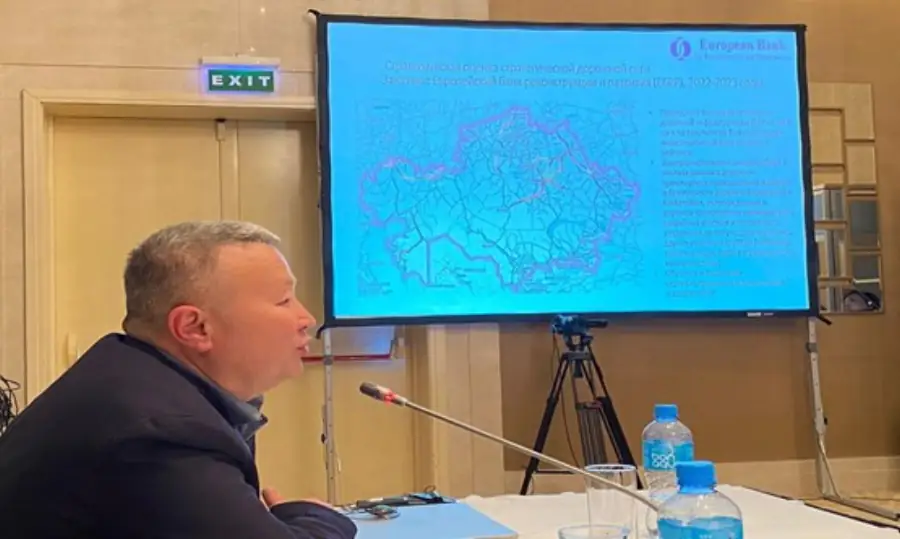
On 6 September 2023 in Astana, the United Nations Economic and Social Commission for Asia and the Pacific held the National Capacity Building Workshop on Supporting the Policies on Green and Resilient Transport Infrastructure along the Asian Highway Network. KazSRIRS Director Mr Arystan Massanov presented the report "Strategic Risk Assessment across the Strategic Road Network" and the positive results expected from implementing the IRAP methodology. Leading road safety experts took part in the event.
 2 August 2023
A scientific approach to urban development (Kazakhstanskaya Pravda)
 22 June 2023
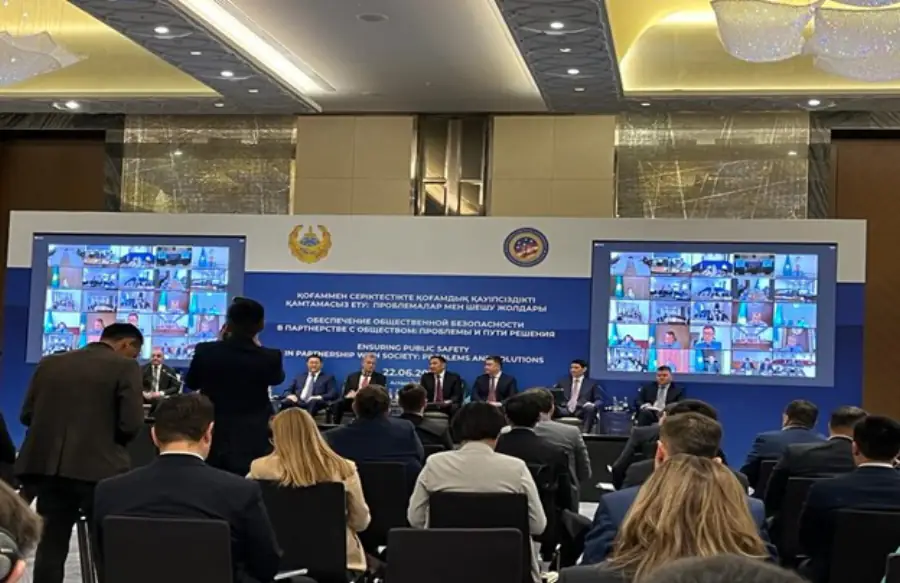
On 22 June 2023, the Ministry of Internal Affairs of the Republic of Kazakhstan, together with the Embassy of the United States of America in Kazakhstan, organised the forum "Ensuring Public Safety in Partnership with Society: Problems and Solutions". All key aspects of public safety were presented and discussed at the forum. Particular attention was paid to road safety.
 8 June 2023
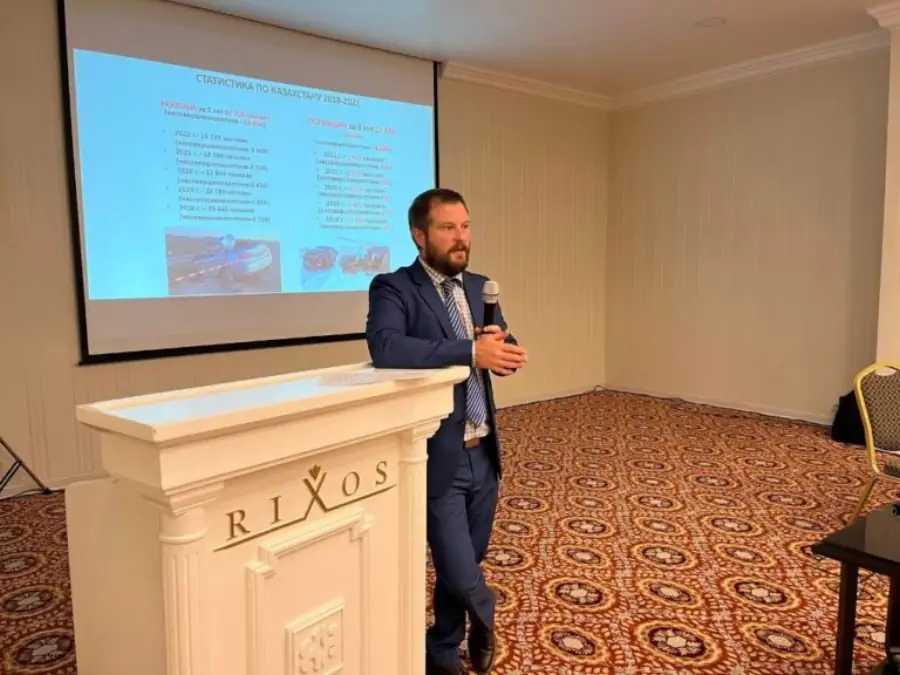
As is well known, the Head of State has repeatedly spoken about the problem of road safety, stressing that human life is priceless and that government bodies and society must take every possible measure to reduce deaths and injuries from road crashes. Since the problem is not unique to our country and virtually every state is working to improve safety on its roads, adopting best practice is extremely important. On 26 May this year in Astana, KazSRIRS LLP held a training seminar for senior officials of government bodies on the importance of improving road safety and the role of the International Road Assessment Programme (IRAP). The trainers were Mr Luke Rogers and Mr Jigesh Bhavsar, leading international IRAP specialists widely known in engineering circles. The seminar discussed the importance of adopting international best practice, in particular the International Road Assessment Programme, as well as methodology, tools, communications and advocacy in support of large-scale action. It was attended by the management of the Committee for Roads of the Ministry of Industry and Infrastructure Development and senior officials of local executive bodies. Some participants joined online. The event went beyond lectures: there was a lively discussion in which participants shared their experience and asked relevant questions.
 8 June 2023
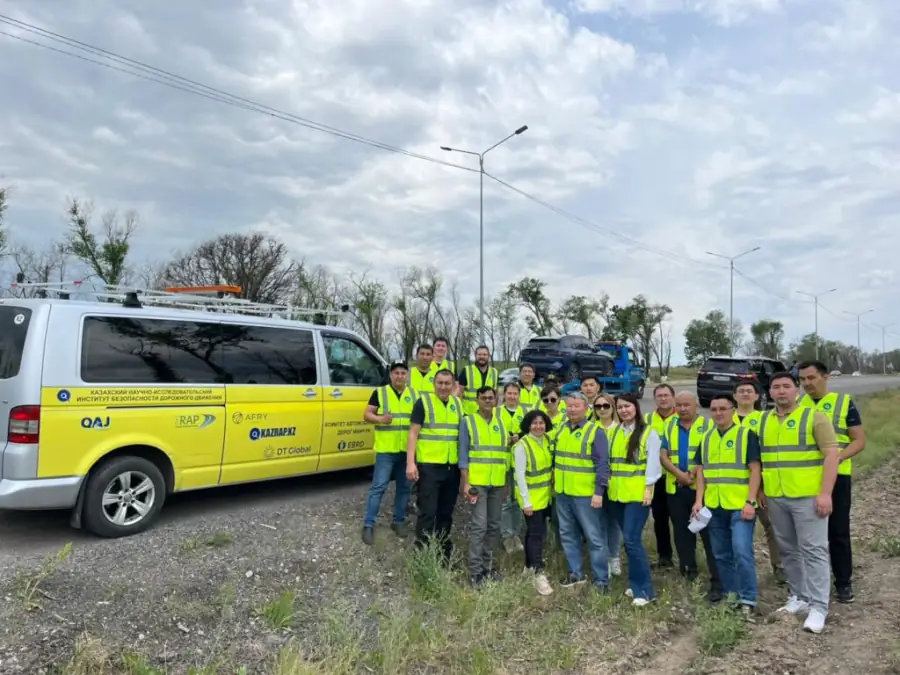
As part of the project "Kazakhstan: Strategic Risk Assessment across the Strategic Road Network", training on implementing the iRAP international safety assessment system in Kazakhstan was held in Almaty and Astana from 22 to 26 May with experts Luke Rogers (Australia) and Jigesh Bhavsar (India). The training was attended by specialists from various road safety organisations: the Committee for Roads of the Ministry of Industry and Infrastructure Development, KazAvtoZhol National Company JSC, the National Center for Road Asset Quality (RSE) and the L. Goncharov Kazakh Automobile and Road Institute.
 8 June 2023
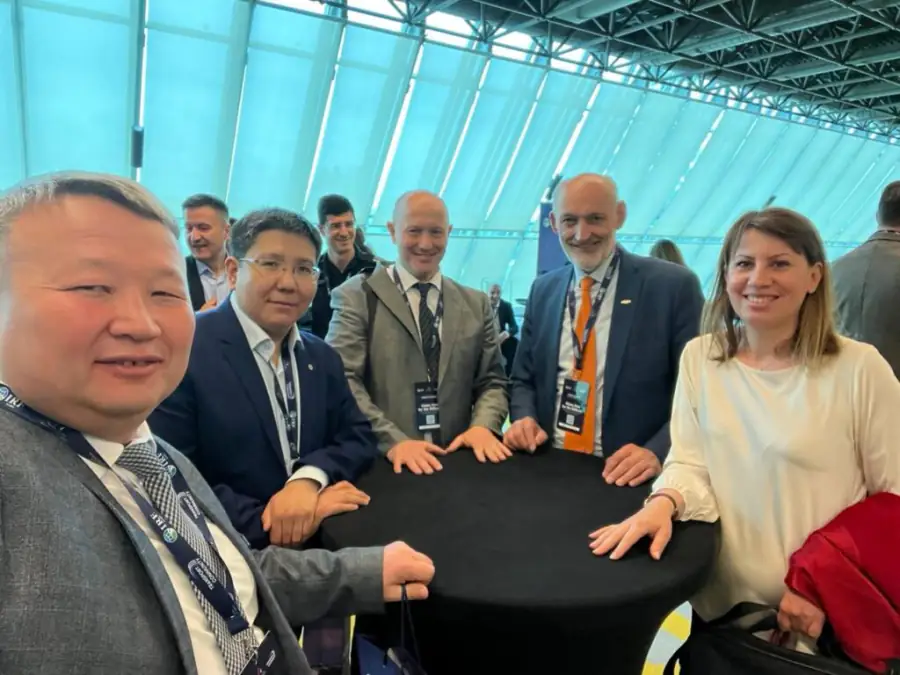
On 15-16 May 2023, Belgrade hosted the international conference Vision Zero for Balkans. The conference was organised by the International Road Federation together with the Government of Serbia.
 30 May 2023
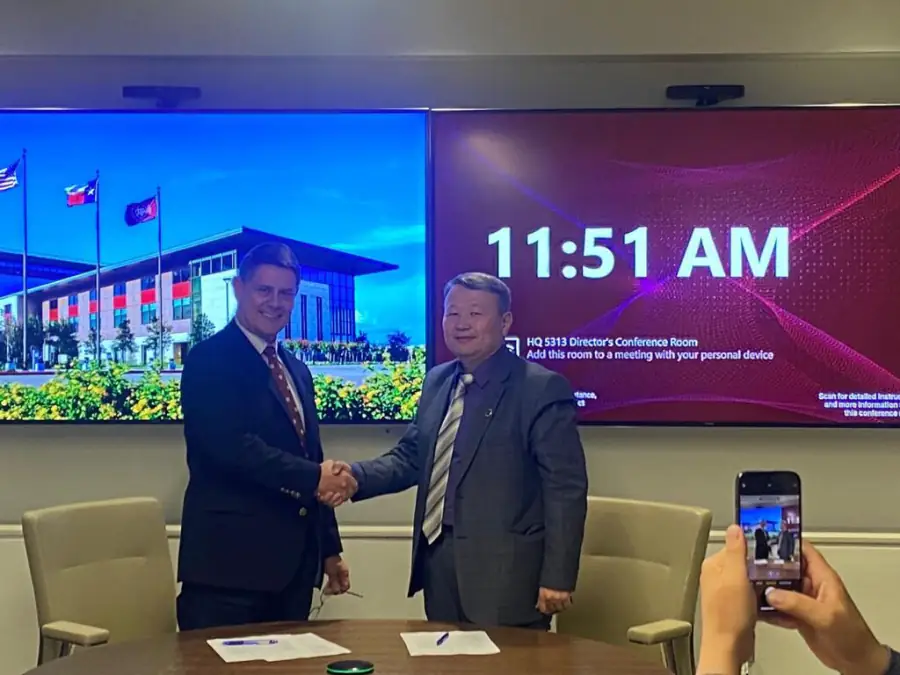
On 6 April 2023, the management of the Kazakh Scientific Research Institute for Road Safety LLP, represented by Director Arystan Massanov and Deputy Director Zhandos Amanbayev, signed a memorandum of cooperation with the management of the Texas A&M Transportation Institute. The Texas A&M Transportation Institute is a leading US research centre with the latest technologies and advanced equipment that make it possible to carry out highly complex experiments to improve the quality, durability and safety of roads. The US Government commissions the Texas A&M Transportation Institute to develop standards, conduct research and deliver many other projects. Leading and renowned scientists such as Akram Abu-Odeh, Lance Bullard, Stuart Denner and others work at the Texas A&M Transportation Institute. The signed memorandum will foster scientific cooperation, benefit Kazakhstani scientists and enable the adoption of best practices.
 17 April 2023
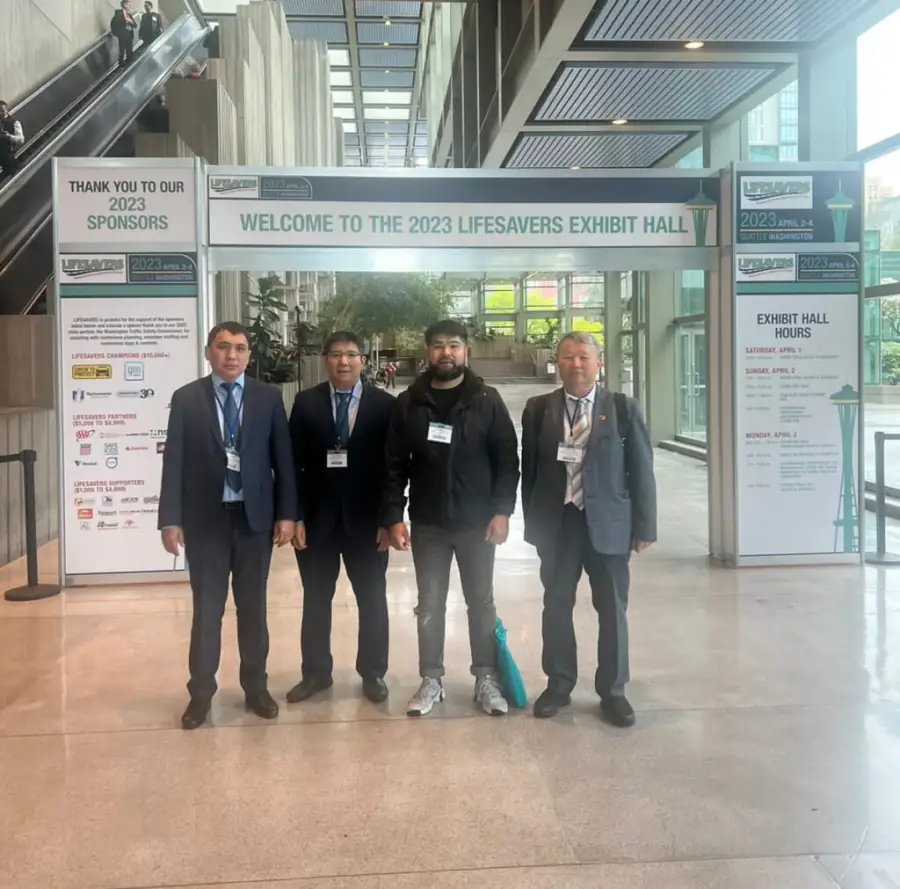
A Kazakhstani delegation made up of representatives of the Kazakhstan National Association of Professional Engineers and Consultants, the Kazakh Scientific Research Institute for Road Safety LLP and KazdorNII JSC is taking part in Lifesavers, the largest annual road safety conference in the USA, held in Seattle this year for the 41st time. The conference runs from 2 to 4 April, and its speakers include leading scientists from American universities, representatives of the Federal Government and state Departments of Transportation, as well as practitioners and activists.
 3 June 2022
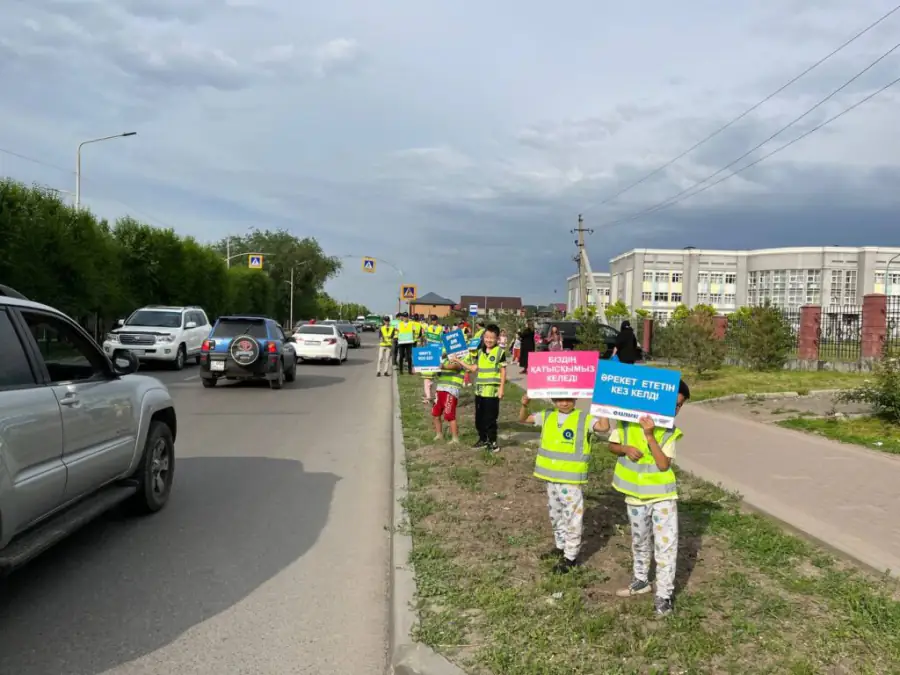
The Kazakh Scientific Research Institute for Road Safety, together with the Almaty City Police Department, the Almaty Urban Mobility Department, the Kazakh Automobile and Road Institute and KazdorNII JSC, is holding a campaign dedicated to the UN Global Road Safety Week on 16-22 May 2022.
 12 April 2022
A video on the importance of safe driving.
 22 November 2021
Under UN General Assembly Resolution No. 60/5 of 1 December 2005, 21 November this year is the World Day of Remembrance for Road Traffic Victims. To mark the date, at 14:00 the Kazakh Scientific Research Institute for Road Safety LLP (hereinafter KazSRIRS), together with the Almaty City Akimat, the Almaty City Police Department and KazdorNII JSC, plans to hold an event dedicated to the Day of Remembrance for Road Traffic Victims. The aim of the event is to draw public attention to road crashes and deaths on the roads.
 14 May 2021
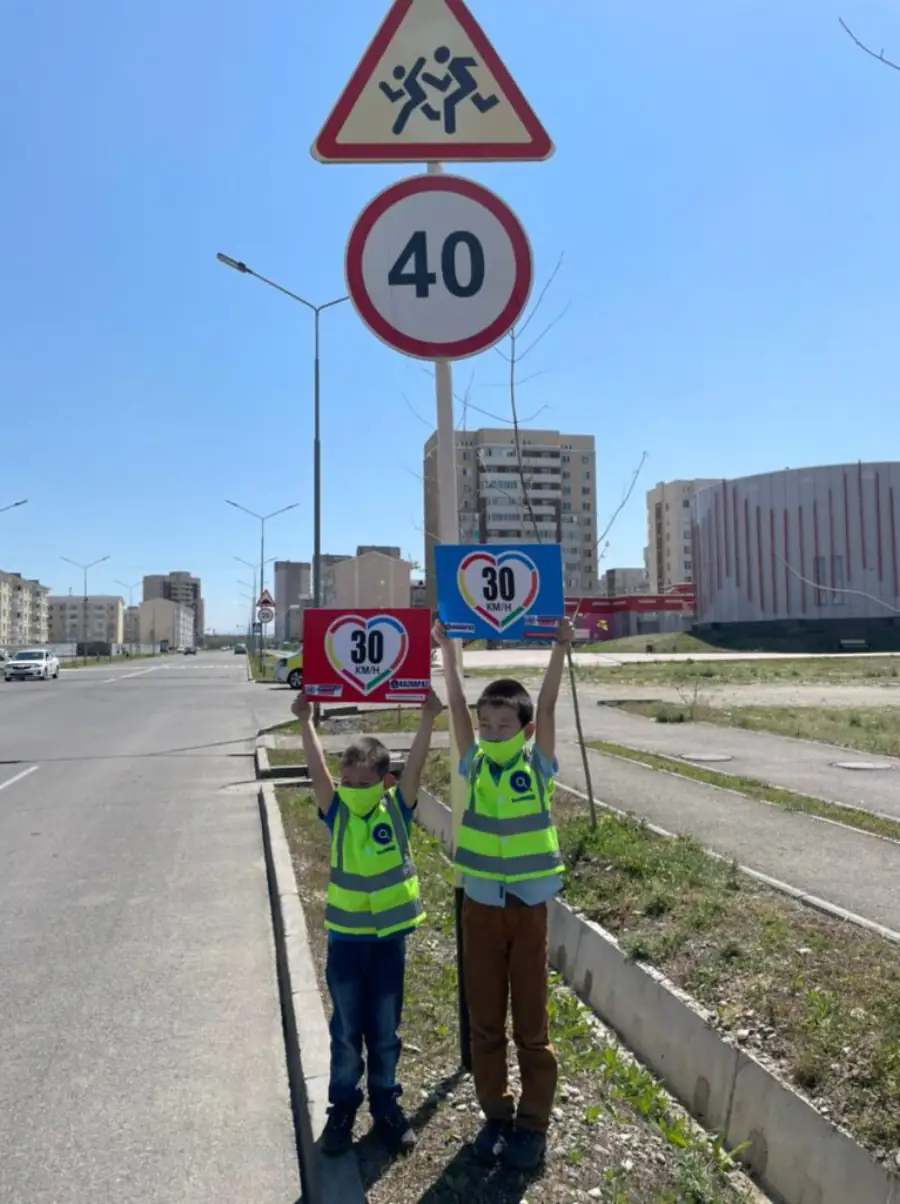
The Kazakh Scientific Research Institute for Road Safety, together with the Committee for Roads of the Ministry of Industry and Infrastructure Development of the Republic of Kazakhstan and the Taldykorgan City Akimat, held a flash mob to mark the UN Global Road Safety Week, taking place on 16-23 May 2021.
 22 November 2020
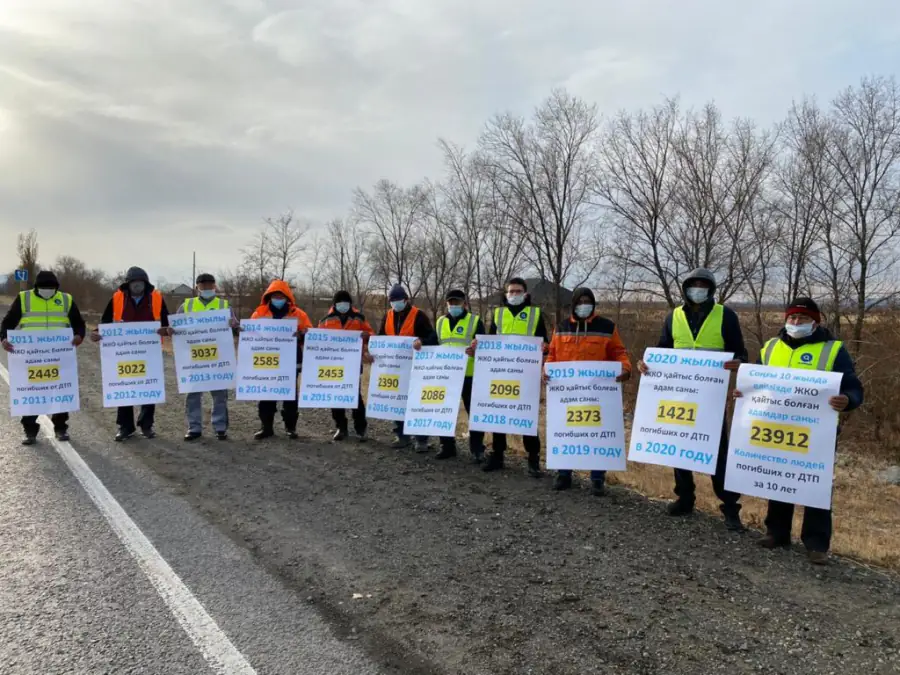
15 November is the World Day of Remembrance for Road Traffic Victims. To mark the date, the Kazakh Scientific Research Institute for Road Safety LLP, together with KazAvtoZhol National Company JSC and with the participation of KazakhAvtoDor LLP, held an event dedicated to the Day of Remembrance for Road Traffic Victims. The aim of the event was to draw public attention to road crashes and deaths on the roads. The event took place at km 251 of the Almaty-Oskemen road (at the exit from the settlement of 3 Otdeleniye), in the direction of Almaty.
 5 November 2020
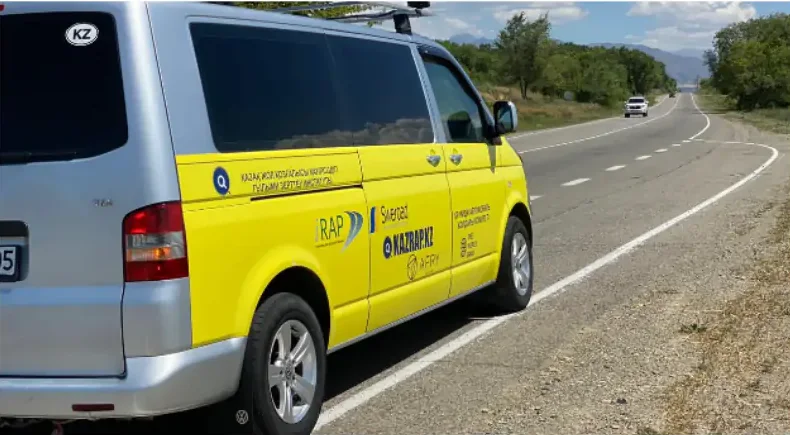
The International Road Assessment Programme (iRAP) has published on its official website an update on the progress of the road safety assessment project in Kazakhstan. KazSRIRS LLP thanks iRAP for covering the project in our country and is confident that close cooperation between our organisations will continue, for the sake of safer roads and saving lives on our country's roads. KazSRIRS, in turn, reaffirms its commitment to zero tolerance of violations on the roads.
 5 November 2020
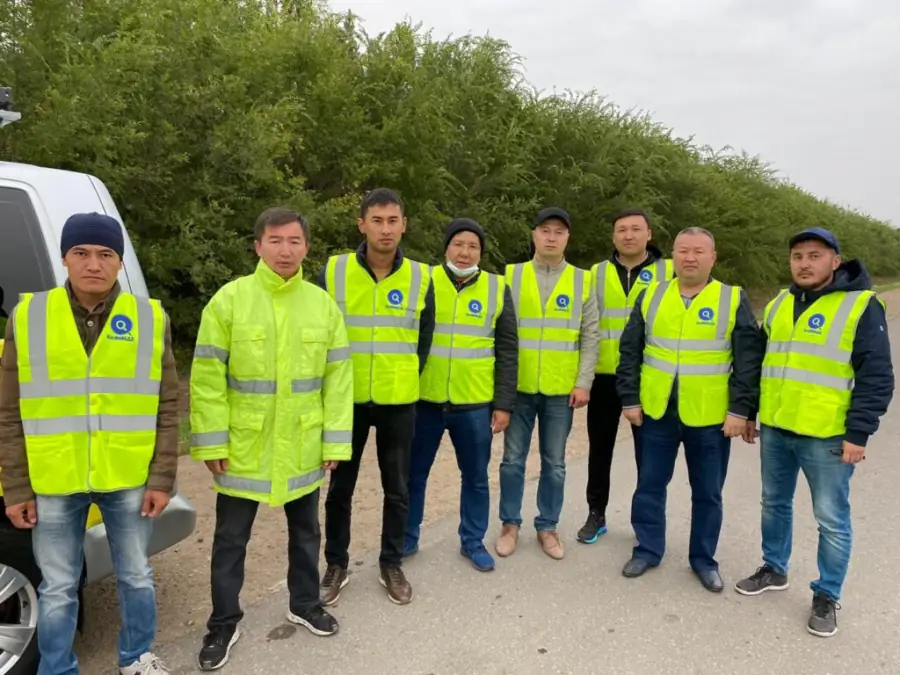
The Committee for Roads of the Ministry of Industry and Infrastructure Development of the Republic of Kazakhstan and SweRoad, together with the Kazakh Scientific Research Institute for Road Safety, are implementing a project to introduce the iRAP international road safety assessment system in Kazakhstan under a World Bank loan.
 26 August 2020
As is well known, road safety in our country needs significant improvement. The scale of the problem has been highlighted even by President Kassym-Jomart Tokayev.
 5 August 2020
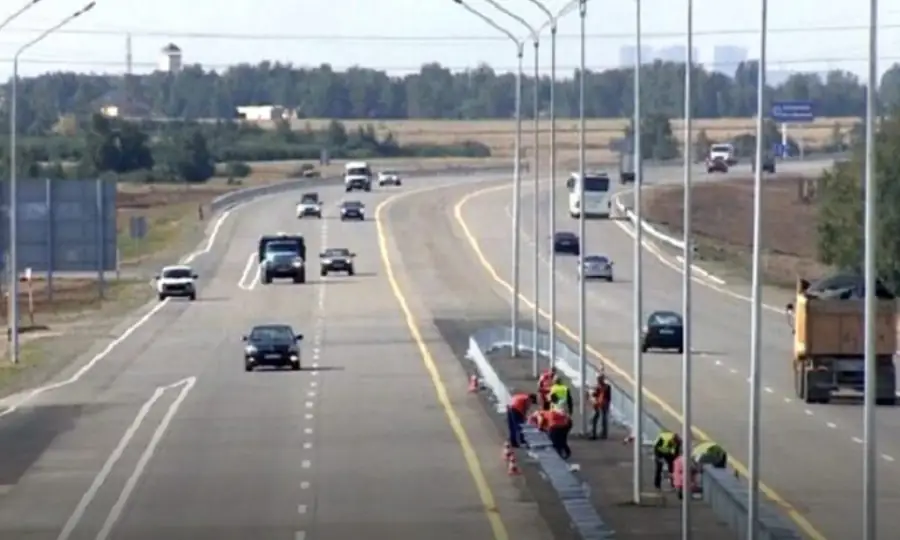
The high death rate on Kazakhstan's roads remains a major problem. As the country's President Kassym-Jomart Tokayev noted: "The death rate on the roads remains high. The likelihood of dying in a road crash in Kazakhstan is 11 times higher than in European countries. We have discussed this problem both in Parliament and in the Government. However, it remains unresolved and pressing. The number of people killed is comparable to the losses in major armed conflicts and even wars."
 11 May 2020
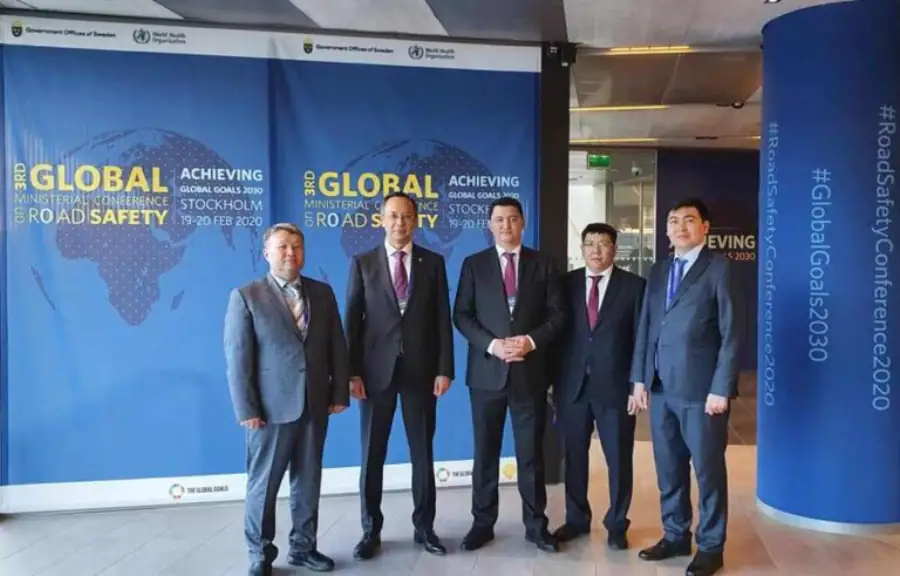
Zhandos Amanbayev, Director of the KNAPIK Association of Legal Entities, took part in the Third Global Ministerial Conference on Road Safety, "Achieving Global Goals 2030", held on 19-20 February 2020 in the Swedish capital, Stockholm.
 11 May 2020
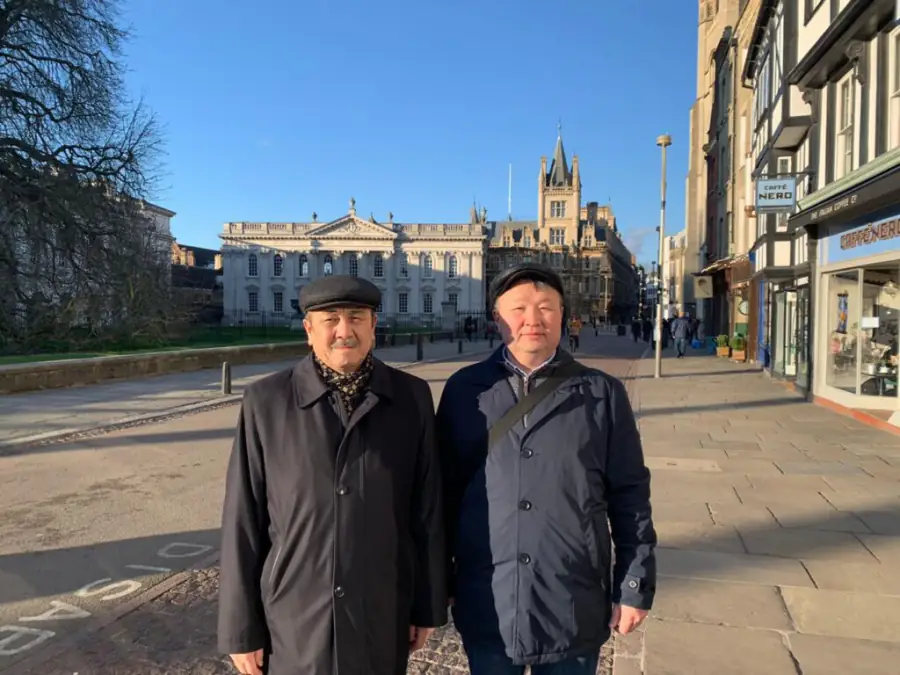
On 24-28 February 2020, a Kazakh delegation consisting of B. Teltayev, President of Kazakhstan Highway Research Institute JSC (KazdorNII), and A. Massanov, Director of the Kazakh Scientific Research Institute for Road Safety (KazSRIRS) and President of the Kazakhstan National Association of Professional Engineers and Consultants (an association of legal entities), visited the Cavendish Laboratory, the Department of Physics, the Cambridge Central Asia Forum and the University of Cambridge. The Cavendish Laboratory is famous for the Nobel laureates who came out of it and made major contributions to science.
 11 May 2020
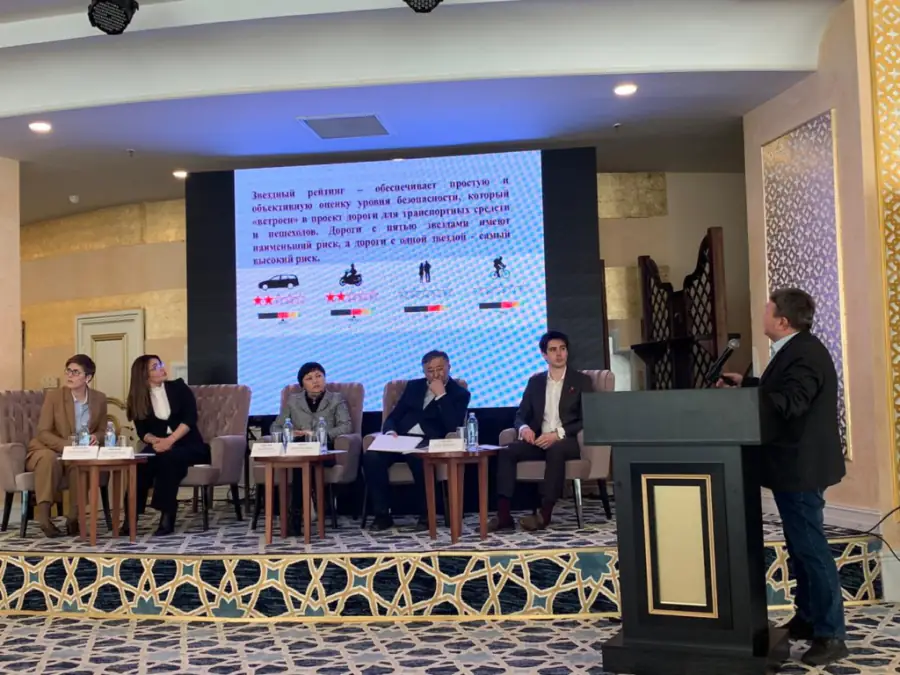
On 11 March 2020, at the initiative of the Dvizhenie bez Opasnosti (Traffic Without Danger) expert centre (Russian Federation), a round table on preventing road traffic injuries among children was held in Nur-Sultan. It was attended by representatives of the Ministry of Education and Science, the Ministry of Healthcare and the Ministry of Internal Affairs of the Republic of Kazakhstan, Yandex.Taxi, UNICEF and non-governmental organisations.
 9 October 2019
Over the past ten years, the green economy and care for the environment have become global trends. European countries switched to separate waste collection long ago and use energy-saving light bulbs, while the US government is introducing tough measures against industrialists who pollute the air. Our country is keeping pace too: it is building legal "protection" for nature, passing laws and involving the public. Various civic initiatives help greatly in this, and their main driving force is young people. It is they who take part with great enthusiasm in environmental campaigns and community clean-ups, put forward ideas for using new resource-saving technologies with regard to nature and come up with new solutions. The new generation is full of energy and ambition. But in the absence of clear programmes and projects, all this work often remains at the level of ideas. To bring structure to this work, the social project "Thrifty Youth" was recently launched in the country. The essence of the project is to put the concept of environmental culture into practice among young people. It sets out mechanisms for the younger generation's interaction with the environment. How does this interaction work? Project participants meet regularly and tackle a number of specific tasks. For example, pensioners need help cleaning up their courtyard. No problem: we got together, got started and did a small good deed. All clean! Another task: to visit an industrialist together with environmentalists and explain the harm caused by the plant's emissions. Done! But the most important thing is to follow the principles of caring for the environment, starting with oneself, and then to explain them to others and spread the campaign. The main goal of the social project is to develop a culture of rational resource use among young people and to instil a responsible attitude to the world around them. We can take as examples Japan, South Korea, Switzerland, Norway, Finland and other countries whose core principle is to protect nature through a rational approach: that is, to save water, use alternative energy sources, sort waste, use paper bags and so on. The country saw a boom in "green technologies" after the EXPO world exhibition. Young specialists were among those who initiated these ideas. To ensure such ideas are not forgotten and the technologies continue to develop, young people need to be far more involved. That is why the "Green Economy" is one of the key points in promoting the Thrifty Youth concept. The Thrifty Youth project focuses on using water, land and biological resources more efficiently. This is a burning issue. In our vast country, with its boundless steppes, forests, lakes and nature reserves, there is an acute shortage of young professionals. Young specialists who devote themselves to the environment are offered good conditions and decent salaries. All that is needed is to put new ideas into practice. Of course, the work means being far from home, in heat and cold, but the results will not be long in coming. We will protect our resources from inefficient use. A separate set of tasks concerns modernising existing infrastructure and building new infrastructure. Young engineers, builders, laboratory technicians and designers are the main force here. Thanks to them, new buildings and technological solutions to protect nature are being created. One example of introducing new technologies into the environment is the Smart City project, successfully implemented in the town of Akkol in Akmola Region. The town has a centre that collects data from all of the town's video surveillance, environmental monitoring, energy control and metering, traffic management and fire safety systems, which is then transmitted to the Smart Aqkol situation centre. The town has replaced its water and electricity meters with ones that transmit readings automatically. Old lamps have been replaced with dimmable street lights that switch on and off automatically, saving 10% on electricity. Such smart systems help ensure the efficient operation of municipal services and the safety and comfort of residents. We hope that such "smart cities" will soon appear on the map of our country. Emissions are a major environmental problem. Environmental standards must be observed when building plants and factories, and compliance must be monitored. If young people who understand the importance of protecting the environment come into this field, everyone will benefit: business owners, the public and nature. Particularly important in this respect is improving people's well-being and the quality of the environment through cost-effective ways of easing pressure on the environment. Here it is important to learn from the countries that lead in environmental protection, for example how Norway uses wind farms and power plants to store electricity. It also matters how young specialists take part in this project. One of the key components of the project's success is training and educating young people in environmental issues, management and psychology: for example, in planning skills, with experienced experts brought in to run master classes, training sessions, lectures and so on. In addition, outreach work is needed to build a culture of rational resource use, which is also our main task. We must understand that these and other tasks important for the country cannot be successfully solved without the effective participation of young people. How effective this participation is depends on how well young people understand their role in the country's development, feel their responsibility and are ready to make decisions for the sake of their future. In this respect, the Thrifty Youth project will play an important role and contribute to preserving our environment.
 3 September 2019
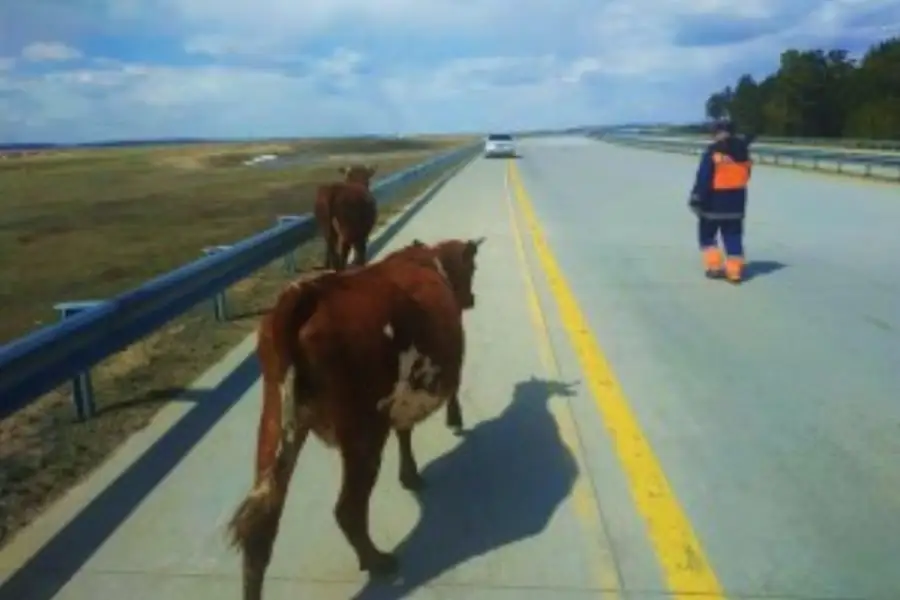
Since the beginning of 2019, 13 road crashes, in which 1 person was injured, have been recorded on the toll sections Nur-Sultan-Shchuchinsk, Nur-Sultan-Temirtau and Almaty-Khorgos. The Toll Roads Directorate branch of QazAvtoJol National Company JSC is taking comprehensive measures to ensure safety on toll road sections.
 27 August 2019
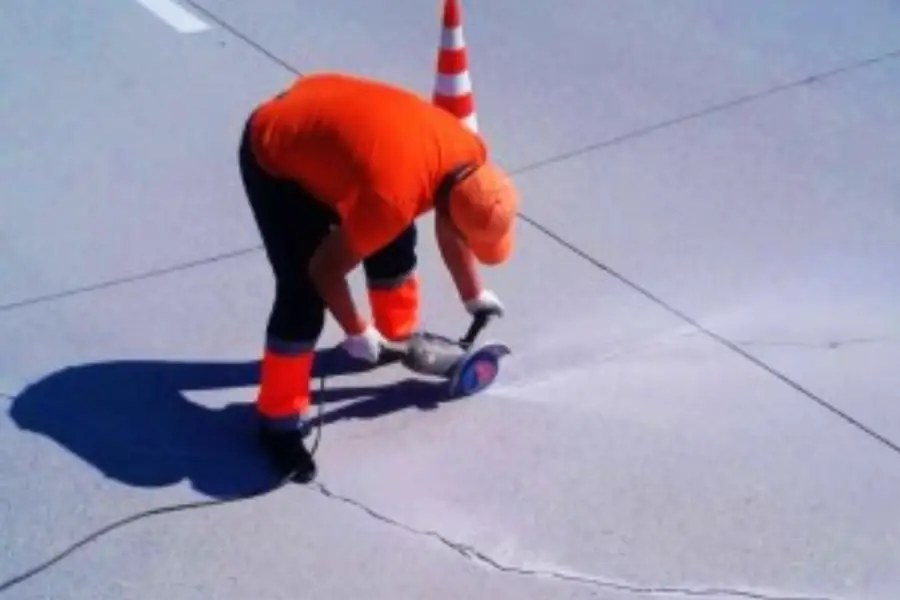
As part of maintenance and routine repairs, the Toll Roads Directorate branch of QazAvtoJol National Company JSC carries out scheduled work on an ongoing basis to keep toll roads in good operating condition.
 20 August 2019
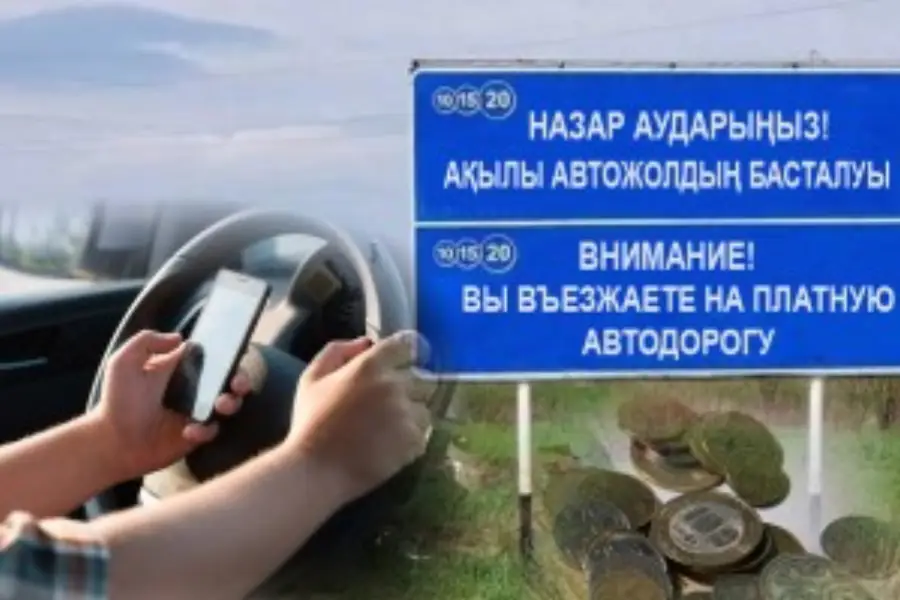
There are several reasons why a debt may be charged to a vehicle's number plate: 1. All toll roads are divided into zones. At the boundary of each zone, devices are installed that read vehicle information and calculate the charge for that section. If a vehicle travels between these sections but does not pass through a toll plaza, or does not have enough funds in its account to be debited, the amount is charged as a debt. 2. Insufficient funds. Sometimes a driver does not have enough money to pay at the toll plaza. In that case, the outstanding amount is charged as a debt. 3. If, because of human factors (a road crash, a vehicle entering another lane), a queue of vehicles more than 300 metres long builds up at a toll plaza, all barriers are raised and vehicles pass without paying. However, the amount is recorded as a debt and added to the charge the next time the vehicle passes through the toll section.
 13 August 2019
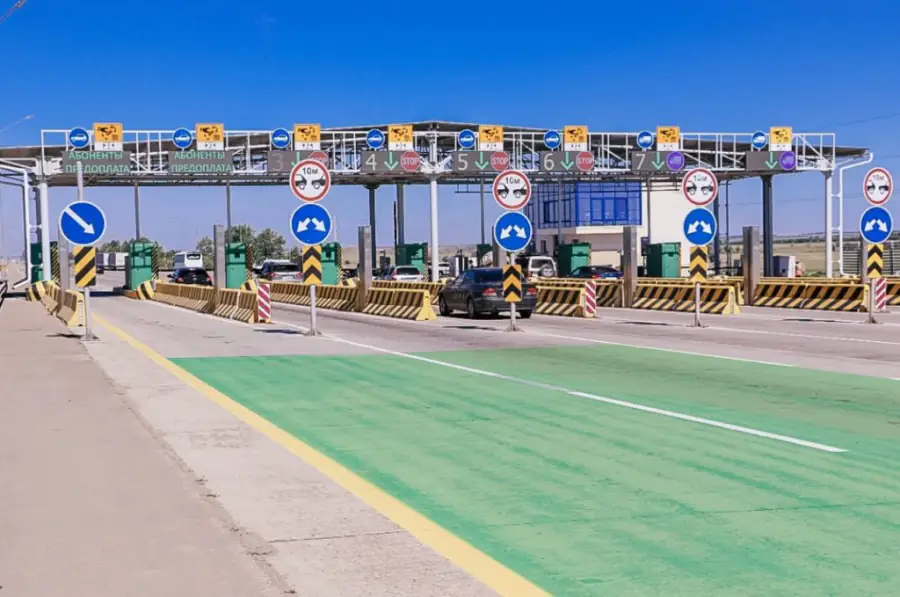
Kazakhstan's first toll section opened six years ago. This year their number has reached four. All toll roads are equipped with modern toll plazas. To pass through a toll plaza quickly and safely, you need to follow a few simple rules.
 27 February 2019
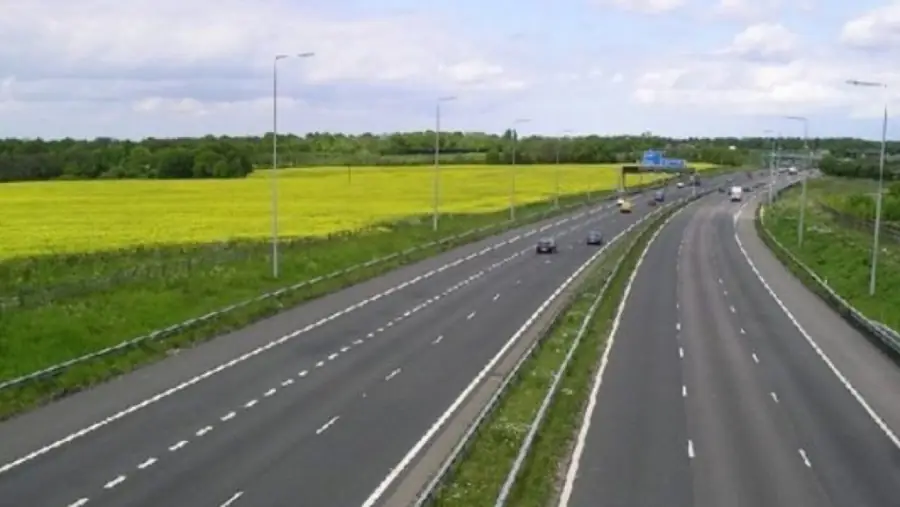
The condition of 95% of regional and district roads could improve by 2025, the Head of State said
 24 February 2019
The anniversary political forum will take stock of five years of work. The international discussion platform Astana Club is convening for its fifth meeting. The next gathering of 50 of the world's top politicians, recognised Eurasian intellectuals and leading experts in international relations is scheduled for 11-12 November 2019 in the capital of Kazakhstan. As usual, the event will be organised by the Institute of World Economics and Politics and the Foundation of the First President of the Republic of Kazakhstan - Elbasy. The agenda covers pressing security issues and the strategic future of Greater Eurasia. Over five sessions, Club members will discuss the most acute problematic trends in the development of the states and peoples of Eurasia, identify new opportunities for regional cooperation and outline the contours and scenarios of the future. Conceptually, all discussions will focus on the main question: building a new architecture of cooperation in Greater Eurasia. The choice of this topic is driven by the large-scale destruction and degradation of the global institutions that have ensured stability in international relations over the past 70 years. Moreover, the peak of this destruction falls precisely on the current period, as reflected in the collapse of strategic agreements on nuclear security, growing protectionism in the global economy and the escalation of sanctions. Climate deterioration has emerged as a new global threat that has already affected every nation without exception. As a result, strategic uncertainty is growing as to how sustainable our development will be. All these issues call for an honest and open discussion. Participants and the general public will also be presented with the second edition of the analytical ranking "Top 10 Risks for Eurasia in 2020", produced by the Institute of World Economics and Politics. The foresight analysis presented in last year's first edition of the risk ranking proved to be in high demand in practice, and IWEP is preparing a new publication for the next Club meeting. The ranking is the result of research by IWEP experts with the participation of 40 leading international experts. International interest in the Astana Club stems from the fact that this Kazakh discussion platform, established in 2015, has in a short time become a truly global platform that brings together all the key stakeholders of Eurasia to develop common approaches to the most complex issues of our time. In this sense, the Astana Club is a vivid expression of Kazakhstan's multi-vector foreign policy. Over its entire history, more than 200 speakers from 40 countries have taken part in the Club's work, including the USA, China, Russia, Germany, Turkey, the UK, France, Japan, South Korea and others. Over its five-year history, the Astana Club's speakers and headliners have included such well-known politicians and experts as José Manuel Barroso, Mohamed ElBaradei, Ahmet Davutoğlu, Václav Klaus, Hamid Karzai, George Friedman, Ian Morris, Robert Kaplan and many others. The First President of the Republic of Kazakhstan - Elbasy Nursultan Nazarbayev also takes part in the annual meetings of the Astana Club. It should be noted that the discussions at Astana Club meetings have become an important platform for shaping and promoting the "Greater Eurasian discourse". Each meeting of the Club is devoted to a particular aspect of the newly emerging phenomenon of "Greater Eurasia", which encompasses all the states of Asia and Europe within the Eurasian megacontinent and addresses their interaction in politics, economics and security. The very first meeting of the Astana Club, held in November 2015, examined the geoeconomics of Eurasia. The second meeting discussed the opportunities and challenges of the forthcoming transformations across Eurasia. The third meeting of the Club in 2017 was held under the theme "Greater Eurasia - 2027: Confrontation or Partnership". In 2018, the experts' work at the fourth meeting of the Astana Club centred on the main theme, formulated as "Towards Greater Eurasia: How to Build a Common Future?". The theme of the Club's fifth meeting will be "Greater Eurasia: Towards a New Architecture of Global Cooperation". The Club's expert discussions will focus on the current escalation of the confrontation between the USA, China and Russia, the rise of trade protectionism and populist sentiment, and a new round of escalation in many of the world's hot spots. Particular attention will be paid to shaping the future architecture of cooperation in Eurasia and to finding answers to key global security challenges, such as the global nuclear missile arms race.
No publications for this year.
Describe the task - network length, road type and the required output. We will reply within one working day.